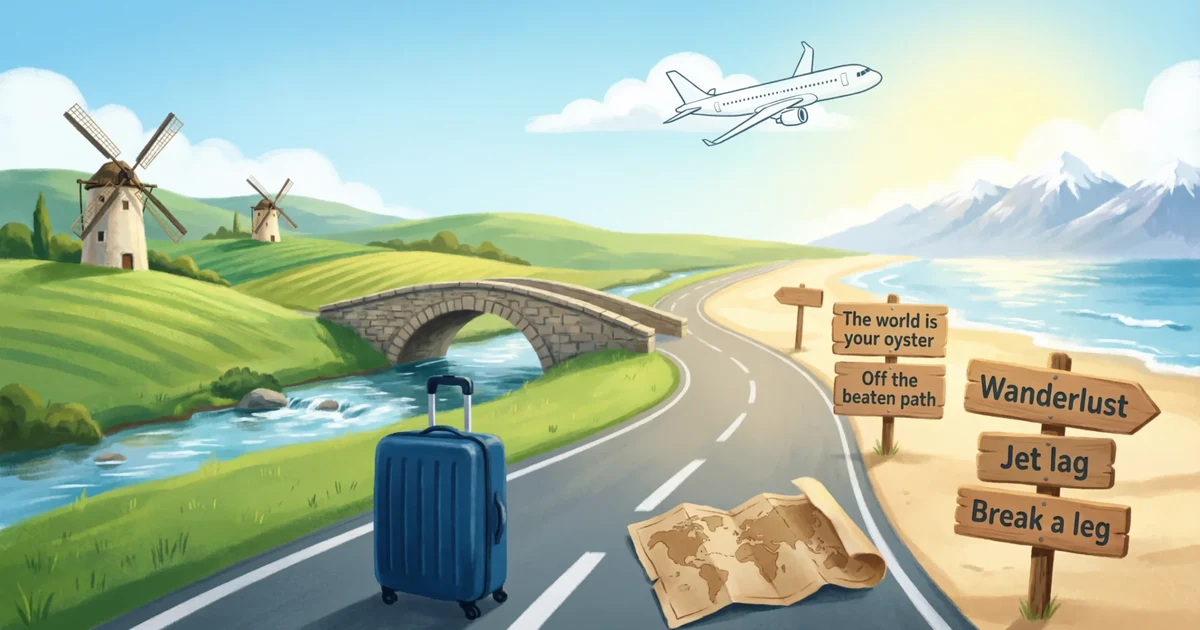
Travel has always inspired many expressions in English. People often use travel idioms when they talk about journeys, life choices, and new experiences. These phrases add color to everyday conversations. They also make communication sound more natural and engaging.
Idioms for travelling appear in casual talks, stories, movies, and even business discussions. Sometimes the words sound like they refer to an actual trip. In reality they often describe situations in life. Someone might say they want to hit the road or take the scenic route when making decisions.
Learning these idioms helps you understand native speakers better. It also makes your English sound more fluent. Once you know how they work, you will start hearing them everywhere. Conversations about work, life, or personal goals often include travel related expressions.
Meaning and Definition of Idioms for Travelling
Idioms for travelling are phrases that come from the idea of journeys, roads, and movement. Their meanings usually go beyond the literal sense of traveling. Instead they describe emotions, decisions, life paths, or experiences.
For example, someone may say they are at a crossroads. The phrase sounds like a road intersection. In conversation it actually means a person must make an important decision. Many travel idioms work in the same way.
These expressions help speakers explain complex ideas with simple words. A single idiom can describe adventure, uncertainty, change, or progress. Because travel is something people understand everywhere, these phrases feel relatable and easy to imagine.
When you learn idioms for travelling, you also learn how English speakers describe life as a journey. That is why these expressions appear often in both casual and professional conversations.
Common Idioms for Travelling
Hit the Road
Meaning: To start a journey or leave a place.
Uses: People say this when they are ready to begin traveling or leave after a visit. It sounds friendly and informal.
Example: We should hit the road before traffic gets heavy.
Life Is a Journey
Meaning: Life is full of experiences and stages like a long trip.
Uses: People use it when talking about personal growth or life experiences.
Example: My grandfather always reminds us that life is a journey.
Travel Light
Meaning: To carry only necessary things.
Uses: It can describe packing fewer items or living with fewer responsibilities.
Example: I prefer to travel light when I go hiking.
Off the Beaten Path
Meaning: A place that most tourists do not visit.
Uses: People use it when describing unique or less crowded destinations.
Example: We found a small village off the beaten path during our trip.
Catch the Travel Bug
Meaning: To develop a strong desire to travel.
Uses: Often used when someone starts loving travel after their first trip.
Example: After visiting Thailand, she caught the travel bug.
On the Road Again
Meaning: To start traveling again after a break.
Uses: People say this when they return to traveling or touring.
Example: After a week at home, I am on the road again.
At a Crossroads
Meaning: Facing an important decision.
Uses: Used when someone must choose between different paths in life.
Example: After graduation, he felt at a crossroads.
Take the Scenic Route
Meaning: To choose a longer but more enjoyable path.
Uses: Often used when someone prefers experience over speed.
Example: We took the scenic route through the mountains.
Go the Distance
Meaning: To complete something despite challenges.
Uses: People use it when encouraging perseverance.
Example: If you stay focused, you will go the distance.
Live Out of a Suitcase
Meaning: To travel constantly without staying in one place.
Uses: Often used for people who travel for work.
Example: Flight attendants often live out of a suitcase.
A Journey of a Thousand Miles Begins with a Single Step
Meaning: Big achievements start with small actions.
Uses: People say this when encouraging someone to begin something important.
Example: Starting a new business can feel hard, but remember a journey of a thousand miles begins with a single step.
Break the Journey
Meaning: To stop somewhere during a long trip.
Uses: Used when travelers pause to rest during a journey.
Example: We decided to break the journey and stay overnight.
The World Is Your Oyster
Meaning: You have many opportunities in life.
Uses: People say this to encourage someone about their future.
Example: You just graduated, the world is your oyster.
Hit the Ground Running
Meaning: To start something quickly and energetically.
Uses: Often used in work or new projects.
Example: She hit the ground running on her first day at work.
Miles Away
Meaning: Thinking about something else.
Uses: Used when someone seems distracted.
Example: He looked miles away during the meeting.
In the Same Boat
Meaning: Sharing the same situation or problem.
Uses: Often used to show empathy with others.
Example: We are all in the same boat during exam season.
The Road Less Traveled
Meaning: A unique or uncommon choice.
Uses: People use it when someone chooses a different path in life.
Example: She chose the road less traveled and started her own company.
Burn the Midnight Oil on the Road
Meaning: To work or stay awake late while traveling.
Uses: Often used for people working during trips.
Example: I had to burn the midnight oil on the road to finish my report.
Smooth Sailing
Meaning: Progress without problems.
Uses: Used when things move easily and successfully.
Example: After the first week, the project was smooth sailing.
Backseat Driver
Meaning: Someone who gives unwanted advice.
Uses: Often used when a passenger tells the driver what to do.
Example: My brother acts like a backseat driver during road trips.
Practical Usage of Idioms for Travelling
Travel idioms appear often in everyday English conversations. People use them when talking about life choices, goals, work, or real trips. These expressions help speakers describe situations in a vivid and relatable way.
You do not need to travel to use these idioms. Many of them simply describe experiences or decisions. Once you learn them, you will notice how naturally they fit into conversations.
Real life examples:
We should hit the road early if we want to reach the beach by noon.
After her first international trip, she definitely caught the travel bug.
He decided to take the scenic route and enjoy the countryside.
Starting a new career felt scary, but she chose the road less traveled.
After a few early challenges, the project became smooth sailing.
Idioms for Travelling vs Travel Phrases Comparison
| Aspect | Travel Idioms | Travel Phrases |
|---|---|---|
| Meaning | Figurative meaning | Literal meaning |
| Usage | Used in conversations and storytelling | Used for practical travel situations |
| Example | Hit the road | Book a flight |
| Purpose | Express ideas creatively | Communicate direct information |
| Tone | Informal and expressive | Simple and practical |
How to Use Idioms for Travelling in Sentences
Using travel idioms becomes easier with practice.
• Use them in casual conversations with friends
• Match the idiom with the situation
• Avoid using too many in one sentence
• Listen to how native speakers use them
• Practice writing small sentences with each idiom
Common Mistakes When Using Idioms for Travelling
Many learners make small mistakes when using idioms.
• Using idioms in very formal writing
• Changing the words inside the idiom
• Using them in the wrong context
• Translating idioms directly from another language
• Using too many idioms in a single conversation
FAQs About Idioms for Travelling
What are idioms for travelling?
They are expressions related to journeys that often describe life situations or experiences.
Why are travel idioms common in English?
Travel is easy to imagine, so people use it to explain life events and decisions.
Are idioms for travelling used in daily conversations?
Yes. Many people use them casually in conversations and storytelling.
Can beginners learn travel idioms easily?
Yes. Many of them are simple and appear often in everyday English.
Do travel idioms always refer to real trips?
No. Many describe life choices, emotions, or personal journeys.
How can I remember travel idioms?
Practice them in short sentences and listen to how others use them.
Are travel idioms used in writing?
Yes. They appear in blogs, stories, and informal articles.
What is the easiest travel idiom to learn?
Hit the road is one of the easiest and most commonly used.
Should I use travel idioms in formal writing?
It is better to avoid them in formal academic writing.
Where can I learn more travel idioms?
You can learn them through conversations, books, and language learning websites.
Conclusion
Idioms for travelling add energy and personality to the English language. They turn simple conversations into more colorful and engaging discussions. Many of these expressions describe life decisions, opportunities, and experiences using the idea of a journey.
Once you understand their meanings, they become easy to use in daily conversations. Start by learning a few common ones and practice them in simple sentences. Over time they will feel natural, just like regular vocabulary. When that happens, your English will sound more confident and expressive.