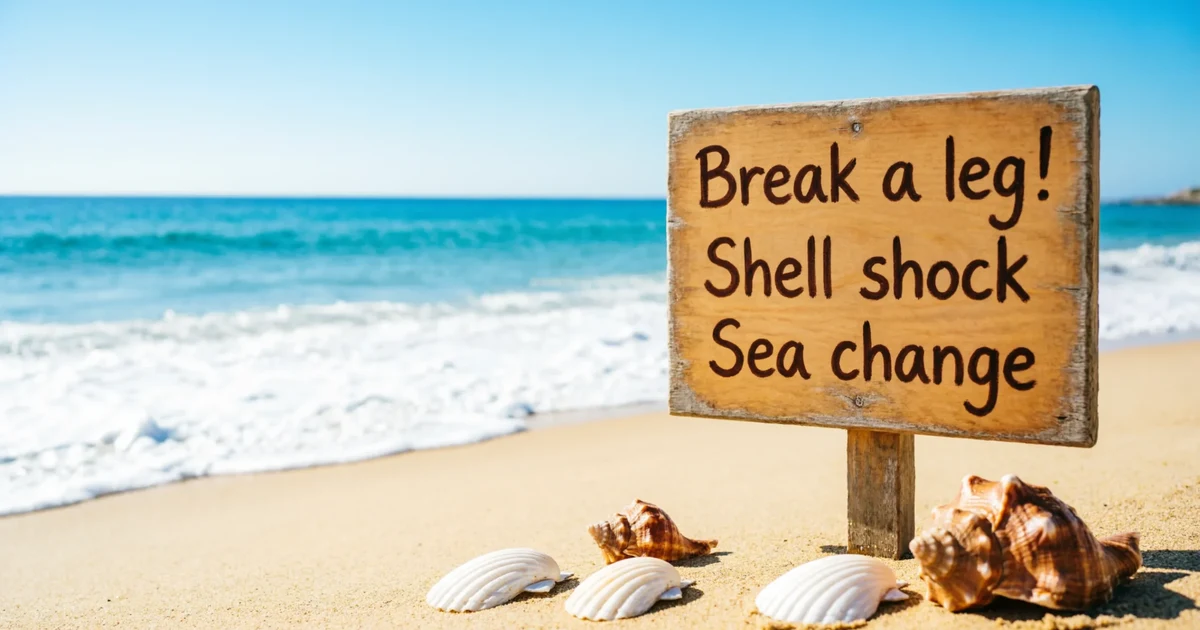
The beach often brings images of sunshine, waves, and relaxing moments by the sea. In English, many everyday expressions also come from the ocean and beach life. These expressions are known as beach idioms. People use them to describe situations, feelings, or actions in a creative way. Even if a conversation has nothing to do with the ocean, these idioms still appear in daily speech.
Many of these phrases come from sailing, fishing, and life near the water. Over time they became part of common English. Today people use them at work, in school, and in casual conversations. When someone says they will “ride the wave” or “test the waters,” they usually talk about decisions or opportunities, not the sea itself.
Learning beach idioms can make your English sound more natural and expressive. They add color to conversations and help you understand native speakers better. Once you know their meanings, you will start noticing them in movies, books, and everyday speech.
Meaning and Definition of Beach Idioms
Beach idioms are phrases that use words related to the sea, waves, tides, or boats to describe real life situations. The literal meaning connects to the ocean, but the actual meaning usually describes emotions, decisions, problems, or success. These idioms help speakers explain ideas in a vivid and memorable way.
For example, when someone says they want to “make waves,” they do not mean they are creating waves in the water. Instead, they mean they want to cause change or draw attention. In the same way, “smooth sailing” does not refer to an actual boat ride. It describes a situation that moves forward without problems.
These idioms became popular because oceans and sailing played an important role in history. People who lived near the coast often used sea related expressions in daily speech. Over time these phrases spread across the English language. Today they appear in conversations, news, and social media, even when no beach is involved.
Understanding beach idioms helps learners communicate more naturally. They allow speakers to express ideas quickly while adding personality to their language.
Common Beach Idioms List
A Drop in the Ocean
Meaning: Something very small compared to what is needed.
Uses: People use this idiom when an effort or amount feels too small to make a real difference. It often appears in discussions about money, time, or resources.
Example: My donation felt like a drop in the ocean compared to the total amount needed.
Make Waves
Meaning: To cause change or attract attention.
Uses: People say this when someone challenges the usual way of doing things or speaks up strongly. It can be positive or negative depending on the situation.
Example: The new manager wants to make waves by improving the company culture.
Ride the Wave
Meaning: To take advantage of a successful moment or trend.
Uses: This idiom describes people who continue moving forward while things go well. It often relates to business, sports, or popularity.
Example: The small company decided to ride the wave of its sudden online success.
Turn the Tide
Meaning: To change a situation in your favor.
Uses: People use this phrase when a difficult situation suddenly starts improving. It often appears in sports or competitive situations.
Example: That final goal helped the team turn the tide of the match.
All at Sea
Meaning: Completely confused or unsure about something.
Uses: This idiom describes a person who does not understand a situation or feels lost. It appears in both school and work contexts.
Example: I felt all at sea during the first day of my new job.
Lost at Sea
Meaning: Feeling completely confused or without direction.
Uses: People use it when someone feels overwhelmed or unsure about what to do next. It often describes emotional or professional uncertainty.
Example: After graduating, he felt lost at sea about his career path.
In the Same Boat
Meaning: In the same difficult situation as someone else.
Uses: This idiom helps people express shared problems or challenges. It creates a sense of understanding between people.
Example: We are all in the same boat trying to finish this project on time.
Smooth Sailing
Meaning: A situation that progresses without problems.
Uses: People say this when something becomes easy after the hard part is finished. It often describes work, travel, or projects.
Example: Once we solved the main issue, it was smooth sailing from there.
Make a Splash
Meaning: To attract a lot of attention quickly.
Uses: This idiom describes a strong first impression or a big public impact. It often relates to business, media, or entertainment.
Example: The startup made a splash with its innovative product launch.
Test the Waters
Meaning: To try something cautiously before making a big decision.
Uses: People use this idiom when they want to see how others react before fully committing.
Example: She decided to test the waters before starting her own business.
Rock the Boat
Meaning: To cause trouble by changing a stable situation.
Uses: This phrase appears when someone worries about creating conflict or disagreement.
Example: I did not want to rock the boat during the meeting.
Like a Fish Out of Water
Meaning: Feeling uncomfortable in a new situation.
Uses: People use it when someone feels awkward or out of place in a different environment.
Example: I felt like a fish out of water at my first corporate event.
Go with the Flow
Meaning: To accept a situation and adapt easily.
Uses: This idiom describes people who stay relaxed and flexible when plans change.
Example: We did not have a plan for the trip, so we just went with the flow.
Keep One’s Head Above Water
Meaning: To manage difficulties without failing.
Uses: People often say this when they struggle to keep up with work, finances, or responsibilities.
Example: She works two jobs just to keep her head above water.
Make a Big Splash
Meaning: To create a strong public impact.
Uses: This idiom often appears when a new idea or product receives a lot of attention.
Example: The movie made a big splash at the film festival.
On the Rocks
Meaning: In trouble or close to failure.
Uses: People commonly use this phrase to describe relationships or businesses facing serious problems.
Example: Their partnership looked like it was on the rocks.
Ride the Tide
Meaning: To follow the direction of change or opportunity.
Uses: This idiom appears when people move with trends or changing situations.
Example: The company decided to ride the tide of online shopping growth.
Out of the Blue Sea
Meaning: Something that happens suddenly and unexpectedly.
Uses: People say this when an event surprises everyone.
Example: Out of the blue sea, he announced he was moving abroad.
Sink or Swim
Meaning: To succeed or fail based on your own efforts.
Uses: This phrase describes situations where someone must prove themselves without help.
Example: Starting your own business often feels like sink or swim.
Still Waters Run Deep
Meaning: Quiet people often have deep thoughts or strong abilities.
Uses: People say this to describe someone calm who may surprise others with their knowledge or talent.
Example: She rarely speaks in meetings, but still waters run deep.
Practical Usage of Idioms for the Beach in Everyday Conversations
Beach idioms appear in many normal conversations, even when people are not talking about the ocean. They help speakers explain emotions, challenges, and opportunities in a creative way. Because the phrases feel visual and familiar, they make communication more engaging.
People often use these idioms at work, with friends, or during casual discussions. Once you learn them, they become easy to recognize and use naturally.
Real life examples:
My manager told me to test the waters before presenting the new idea to the whole team.
After the company solved its financial problems, everything became smooth sailing.
During my first week at the new school, I felt like a fish out of water.
Our team worked hard to turn the tide after losing the first two matches.
Everyone in the class is in the same boat preparing for the final exam.
Beach Idioms Comparison Table
| Situation | Idiom | Meaning |
|---|---|---|
| Facing shared problems | In the same boat | Everyone shares the same challenge |
| Trying something carefully | Test the waters | Check reactions before committing |
| Situation improving | Turn the tide | Change direction toward success |
| Easy progress | Smooth sailing | Things move forward without problems |
| Personal struggle | Keep one’s head above water | Manage difficulties without failing |
How to Use Beach Idioms in Sentences
Use these idioms naturally when describing situations or emotions.
- Match the idiom with the correct situation
- Use them mostly in informal conversations
- Keep the sentence simple and clear
- Listen to how native speakers use them
- Practice them while speaking or writing
Common Mistakes When Using Beach Idioms
Many learners struggle with idioms at first.
- Using an idiom in the wrong context
- Taking the idiom too literally
- Mixing two idioms together incorrectly
- Using too many idioms in one sentence
- Using informal idioms in formal writing
FAQs About Beach Idioms
What are beach idioms?
Beach idioms are expressions related to the sea or ocean that describe everyday situations in a figurative way.
Why are beach idioms common in English?
Many of them come from maritime history and sailing culture, which influenced everyday language.
Are beach idioms used in daily conversations?
Yes. Native speakers often use them when talking about work, challenges, or opportunities.
What is the easiest beach idiom to learn?
“In the same boat” is one of the easiest because its meaning is simple and common.
Can beginners use beach idioms?
Yes. Beginners can start with simple idioms and practice them in conversations.
Are beach idioms formal or informal?
Most of them are informal and work best in casual speech.
How can I remember beach idioms easily?
Try connecting the phrase to a real life situation or visual image.
Do beach idioms appear in movies and books?
Yes. Many films, novels, and TV shows use these expressions regularly.
What is the difference between beach idioms and ocean idioms?
The meaning is very similar. Both come from sea related expressions.
How can I practice using beach idioms?
You can practice by writing short sentences or using them during conversations.
Conclusion
Beach idioms add life and creativity to everyday English. Even though they come from the ocean and sailing culture, people use them in many different situations. They help explain emotions, challenges, and success in a way that feels natural and memorable.
When you learn these expressions, your English begins to sound more fluent and conversational. Start with a few common idioms and practice them in real conversations. Over time you will recognize them quickly and use them with confidence.