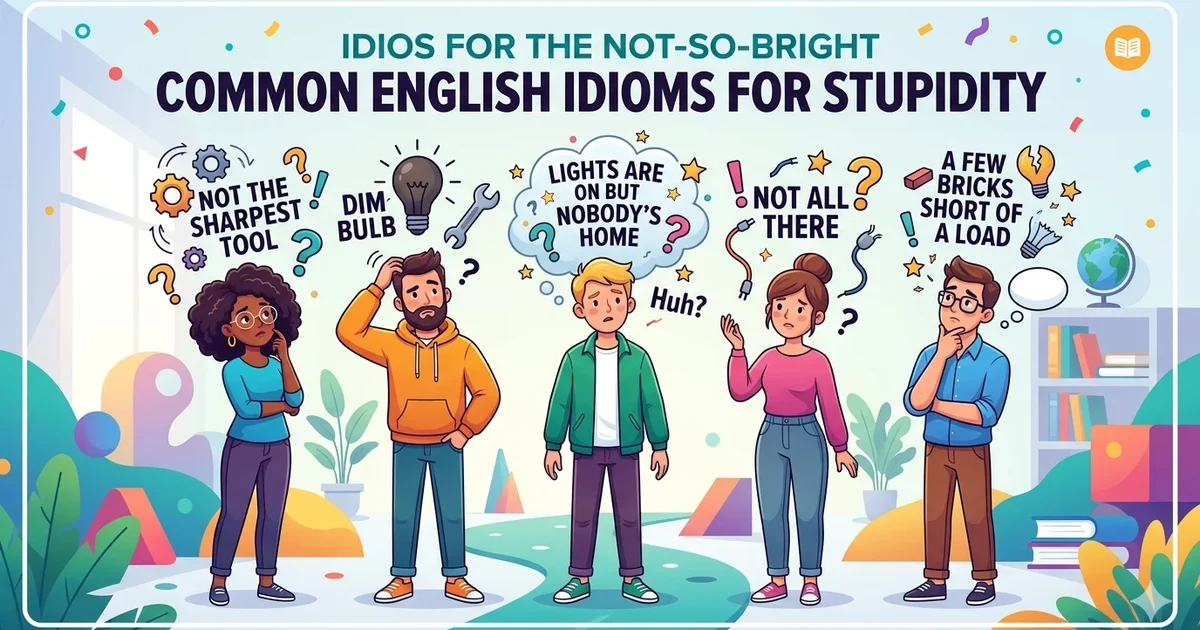
People use idioms every day in English. They add color to conversations and help express ideas in a fun and creative way. Some idioms describe emotions, while others describe people and behavior.
Idioms for stupid fall into this second group. These expressions describe someone who acts foolishly or fails to understand something obvious.
Many of these idioms sound humorous rather than directly insulting. Native speakers often use them jokingly with friends or family. For example, someone might say a friend is not the sharpest tool in the shed after a silly mistake. The phrase sounds lighter than simply calling someone stupid.
Learning these idioms helps you understand casual English conversations better. You will hear them in movies, TV shows, and everyday talk. They also help English learners recognize tone.
Some expressions sound playful while others can sound rude depending on the situation. Knowing the difference helps you use them more naturally.
Meaning and Definition of Idioms for Stupid
Idioms for stupid are expressions that describe a person who seems slow to understand something or behaves in a foolish way. The words inside the idiom often have nothing to do with intelligence directly. Instead they use objects, food, tools, or everyday items to create a funny comparison.
For example, the idiom not the brightest bulb compares a person to a light bulb that does not shine strongly. Another idiom, a few sandwiches short of a picnic, suggests that something is missing. These images make the expression memorable and easier to understand in conversation.
These idioms usually appear in informal English. People use them when joking with friends or commenting on a silly mistake. However tone matters a lot. In a friendly situation they may sound playful. In a serious situation they may sound insulting. Understanding this difference helps learners use them carefully.
Common Idioms for Stupid in English
Not the Sharpest Tool in the Shed
Meaning: Someone who is not very intelligent.
Uses: People say this jokingly when someone makes an obvious mistake or fails to understand something simple.
Example: Jake forgot his keys again. He is not the sharpest tool in the shed.
A Few Bricks Short of a Load
Meaning: Someone who seems mentally slow or confused.
Uses: People use it humorously when a person does something that makes little sense.
Example: After hearing his strange idea, we joked that he was a few bricks short of a load.
Not the Brightest Bulb
Meaning: Someone who lacks intelligence.
Uses: This idiom often appears in casual conversations when describing someone who struggles to understand basic things.
Example: He keeps asking the same question. He is not the brightest bulb.
Slow on the Uptake
Meaning: Someone who takes a long time to understand something.
Uses: People use this when a person finally understands something after a delay.
Example: It took me a moment to understand the joke. I was slow on the uptake.
Dumb as a Rock
Meaning: Extremely unintelligent.
Uses: This phrase exaggerates stupidity by comparing someone to a rock.
Example: My brother joked that he felt dumb as a rock during the math test.
Thick as a Brick
Meaning: Very slow to understand things.
Uses: People use this idiom mainly in British English during casual conversations.
Example: He could not understand the instructions and looked thick as a brick.
Not Playing with a Full Deck
Meaning: Someone who lacks common sense.
Uses: The idiom compares intelligence to a complete deck of cards.
Example: If he thinks that plan will work, he is not playing with a full deck.
A Few Sandwiches Short of a Picnic
Meaning: Someone who behaves strangely or foolishly.
Uses: People say this in a playful way when someone acts oddly.
Example: When he started talking to himself, we joked he was a few sandwiches short of a picnic.
The Lights Are On but Nobody’s Home
Meaning: Someone who looks present but is not mentally engaged.
Uses: This idiom appears when someone seems distracted or confused.
Example: I tried explaining it again, but the lights were on and nobody was home.
Brain Like a Sieve
Meaning: Someone who forgets things easily.
Uses: People use this when someone cannot remember simple details.
Example: I forgot the meeting again. I have a brain like a sieve.
One Fry Short of a Happy Meal
Meaning: Someone who seems silly or not very smart.
Uses: This modern idiom appears mostly in humorous conversations.
Example: My friends say I am one fry short of a happy meal when I forget simple things.
As Dumb as a Doornail
Meaning: Completely unintelligent.
Uses: People use this exaggeration when describing someone who cannot understand simple ideas.
Example: He felt as dumb as a doornail after giving the wrong answer.
Not the Sharpest Knife in the Drawer
Meaning: Someone who lacks intelligence.
Uses: This idiom often replaces harsher words in casual conversation.
Example: He forgot the basic rules. He is not the sharpest knife in the drawer.
A Few Cards Short of a Deck
Meaning: Someone who seems mentally incomplete or confused.
Uses: People use this when someone behaves strangely or illogically.
Example: After hearing that story, I thought he was a few cards short of a deck.
Elevator Doesn’t Go to the Top Floor
Meaning: Someone who is not very smart.
Uses: This idiom compares intelligence to a building elevator that stops early.
Example: If he believes that rumor, his elevator does not go to the top floor.
Missing a Few Marbles
Meaning: Someone who behaves strangely or foolishly.
Uses: People use this to describe someone acting irrationally.
Example: Anyone who jumps into freezing water must be missing a few marbles.
As Thick as Two Short Planks
Meaning: Extremely unintelligent.
Uses: This British idiom often appears in humorous conversations.
Example: He could not follow simple instructions and looked as thick as two short planks.
Doesn’t Have All His Marbles
Meaning: Someone who lacks clear thinking.
Uses: People say this when someone behaves irrationally or forgets things often.
Example: After his strange speech, many people felt he did not have all his marbles.
Head Full of Air
Meaning: Someone who lacks serious thinking.
Uses: This idiom describes someone who rarely thinks carefully about things.
Example: She keeps making silly choices because her head is full of air.
Brain of a Goldfish
Meaning: Someone with very little memory or attention.
Uses: People use this jokingly when someone forgets things quickly.
Example: I forgot the instructions again. I must have the brain of a goldfish.
Practical Usage of Idioms for Stupid in Daily Conversations
Idioms that describe stupidity usually appear in relaxed conversations. Friends use them when joking about mistakes or silly actions. The tone often matters more than the words themselves. If people laugh together, the idiom sounds playful rather than insulting.
You should still use them carefully. These expressions can sound rude in professional or serious settings. In casual talk, however, they help conversations feel more natural and expressive.
Examples:
My brother tried to push a pull door and looked like he was not the brightest bulb.
She forgot her phone at home again and said she felt dumb as a rock.
Tom believed a fake online rumor and everyone joked he was not playing with a full deck.
I explained the instructions twice but he was slow on the uptake.
When Jake forgot his own birthday party time, we teased him for having the brain of a goldfish.
Idioms for Stupid vs Other Insult Idioms Comparison
Some idioms sound humorous while others feel more direct or insulting. The table below shows simple differences.
| Expression Type | Tone | Typical Situation | Example |
|---|---|---|---|
| Idioms for stupid | Playful or humorous | Friendly conversation | Not the brightest bulb |
| Direct insult words | Harsh or rude | Arguments or criticism | Calling someone stupid |
| Sarcastic phrases | Mocking tone | Teasing friends | Genius move |
Idioms for Stupid Comparison Table
| Idiom | Tone | Common Situation |
|---|---|---|
| Not the sharpest tool in the shed | Humorous | Friendly teasing |
| Dumb as a rock | Strong exaggeration | Joke about mistakes |
| Slow on the uptake | Mild | Learning situations |
| One fry short of a happy meal | Playful | Casual jokes |
| Brain of a goldfish | Light humor | Forgetfulness |
How to Use Idioms for Stupid in Sentences
Use these expressions carefully so they sound natural.
• Use them mainly in informal conversations
• Make sure the tone sounds humorous rather than insulting
• Avoid using them in professional or academic writing
• Use them when describing funny mistakes
• Pay attention to context and relationships
Common Mistakes When Using Idioms for Stupid
Many learners misuse these idioms when they first learn them.
• Using them in formal situations like meetings
• Translating idioms directly from another language
• Using too many idioms in one conversation
• Forgetting that tone changes meaning
• Confusing similar idioms with different meanings
FAQs About Idioms for Stupid
What are idioms for stupid?
They are expressions that describe someone who acts foolishly or lacks understanding.
Are idioms for stupid rude?
Some can sound rude depending on tone. Many people use them jokingly with friends.
What is the most common idiom for stupid?
Not the sharpest tool in the shed is one of the most common ones.
Can I use these idioms in formal writing?
No. These idioms belong to informal English.
Why do English speakers use idioms for stupidity?
They add humor and make conversations more expressive.
Are these idioms used in everyday conversation?
Yes. Native speakers use them often in casual talk.
What is a funny idiom for stupid?
One fry short of a happy meal is a funny and playful example.
Do these idioms exist in other languages?
Yes. Many languages have similar humorous expressions.
How can learners remember idioms easily?
Practice them in conversations and read examples in context.
Should I avoid using them completely?
No. Just use them carefully and only in informal situations.
Conclusion
Idioms help bring personality and humor into everyday English. Expressions that describe stupidity often appear when people joke about mistakes or misunderstandings. They create vivid images and make conversations sound more natural.
However these idioms require careful use. Tone and context matter a lot. In friendly settings they sound playful and light. In serious situations they may sound insulting. When learners understand the difference, they can use these expressions more confidently and naturally in real conversations.