Quick Answer Box
What are idioms for laughing?
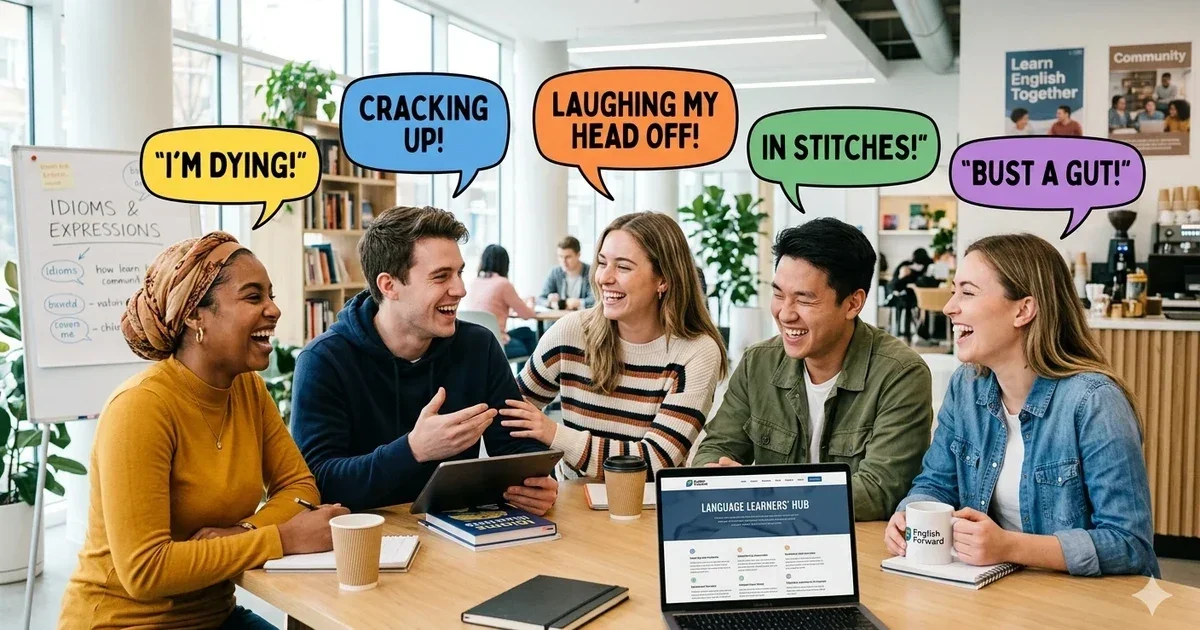
Idioms for laughing are expressions that describe laughter in a more colorful and natural way. Instead of simply saying “laugh,” English speakers use phrases like laugh your head off, crack up, in stitches, and roar with laughter to show different levels of amusement. These idioms make conversations more engaging and help speakers express humor more naturally.
Introduction
Laughter is something everyone understands. It brings people together, makes conversations more enjoyable, and helps create memorable moments. In English, people often use idioms to describe different kinds of laughter instead of simply saying someone laughed. These expressions add color and personality to everyday communication.
You might hear someone say they were “in stitches” after watching a comedy show or that a joke made them “crack up.” Native speakers use these phrases regularly in conversations, movies, books, and social media. Learning them can help you sound more natural and understand English more easily.
Idioms for laughing can describe anything from a small giggle to uncontrollable laughter. Some focus on the intensity of laughter, while others explain how a person reacts to something funny. In this guide, you will learn common laughing idioms, their meanings, practical uses, and ways to use them confidently in daily conversations.
What Are Idioms for Laughing?
Idioms for laughing are expressions that describe laughter in a creative way. The meaning of these phrases is often different from the literal meaning of the words. Because of this, they can sound confusing at first, but they become easy to understand with practice.
English speakers use laughing idioms to show emotions, reactions, and levels of amusement. Instead of saying someone laughed a lot, they might say the person “laughed their head off” or was “rolling on the floor laughing.” These expressions make communication more vivid and engaging.
Learning these idioms can improve both speaking and writing skills. They help conversations sound more natural and make stories more interesting. Whether you are chatting with friends, watching English content, or writing online, these expressions can help you express humor more effectively.
Why Do People Use Idioms for Laughing?
People use laughing idioms because they make communication more expressive. A simple sentence becomes more interesting when it includes a colorful phrase instead of a basic word.
These idioms also help speakers describe different levels of laughter. Some expressions show light amusement, while others describe laughter that is impossible to control.
In many cases, laughing idioms create a stronger emotional connection. They allow people to share funny experiences in a way that feels more lively and memorable.
Common Idioms for Laughing
Laugh Your Head Off
Meaning: To laugh very hard for a long time.
Uses: People use this when something is extremely funny. It often describes strong laughter during movies, jokes, or funny stories.
Example: We laughed our heads off during the comedy show.
Split Your Sides
Meaning: To laugh so much that it feels painful.
Uses: This idiom emphasizes intense laughter. People use it when they cannot stop laughing.
Example: That video nearly split my sides.
Crack Up
Meaning: To suddenly start laughing.
Uses: It is common in casual conversations. People often use it when a joke catches them by surprise.
Example: I cracked up when I saw his reaction.
In Stitches
Meaning: Laughing uncontrollably.
Uses: This expression describes a situation where someone cannot stop laughing.
Example: The audience was in stitches throughout the performance.
Roll on the Floor Laughing
Meaning: To laugh extremely hard.
Uses: Often used online and in casual speech to describe hilarious situations.
Example: That meme had me rolling on the floor laughing.
Burst Out Laughing
Meaning: To start laughing suddenly.
Uses: People use it when laughter happens unexpectedly.
Example: She burst out laughing during the meeting.
Die Laughing
Meaning: To find something extremely funny.
Uses: It exaggerates how funny something is.
Example: You’ll die laughing when you hear this story.
Have a Good Laugh
Meaning: To enjoy a funny moment.
Uses: Used when people share humor together.
Example: We had a good laugh after dinner.
Laugh All the Way to the Bank
Meaning: To benefit financially from something.
Uses: Often used when someone earns money despite criticism.
Example: The actor laughed all the way to the bank after the movie succeeded.
Laugh Like a Drain
Meaning: To laugh loudly and freely.
Uses: Common in informal English.
Example: He laughed like a drain at the joke.
Laugh Up Your Sleeve
Meaning: To secretly laugh at someone.
Uses: Used when someone feels amused but hides it.
Example: She laughed up her sleeve after proving everyone wrong.
Laugh in Someone’s Face
Meaning: To openly show disbelief or mockery.
Uses: Usually used in negative situations.
Example: He laughed in my face when I shared the idea.
Laugh Like a Hyena
Meaning: To laugh loudly and wildly.
Uses: Describes noisy and energetic laughter.
Example: My brother laughed like a hyena during the movie.
Be in Fits of Laughter
Meaning: To laugh repeatedly and uncontrollably.
Uses: Used for very funny situations.
Example: The children were in fits of laughter.
Giggle Like a Schoolgirl
Meaning: To laugh in a light and excited way.
Uses: Often describes playful amusement.
Example: She giggled like a schoolgirl after hearing the compliment.
Roar with Laughter
Meaning: To laugh very loudly.
Uses: Common when groups find something funny.
Example: The crowd roared with laughter.
Howl with Laughter
Meaning: To laugh loudly and continuously.
Uses: Describes powerful laughter.
Example: Everyone howled with laughter at the joke.
Fall About Laughing
Meaning: To laugh so much that you struggle to stay composed.
Uses: Used in British English quite often.
Example: We fell about laughing after hearing the story.
Be Tickled Pink
Meaning: To feel pleased and amused.
Uses: Used when someone feels delighted.
Example: She was tickled pink by the surprise.
Get a Kick Out of Something
Meaning: To enjoy something greatly.
Uses: Describes amusement or enjoyment.
Example: I get a kick out of watching funny pet videos.
Idioms for Laughing Meaning and Usage
Laughing idioms help people describe humor more naturally. Instead of repeating the word “laugh,” speakers can choose expressions that match the situation and intensity of the reaction.
Some idioms describe sudden laughter, while others focus on laughter that lasts a long time. Understanding these differences helps you choose the right phrase and communicate more effectively.
Idioms for Laughing in Daily Conversation
These idioms appear regularly in casual discussions. Friends, family members, and coworkers often use them when talking about funny experiences.
Learning a few common expressions can make conversations feel more natural and engaging.
Idioms for Laughing at Work
Humorous moments happen in workplaces too. Idioms such as “have a good laugh” and “crack up” often appear in informal office conversations.
However, it is important to consider the situation and audience before using very informal expressions.
Idioms for Laughing with Friends
Friends often use the most relaxed and expressive laughing idioms. Phrases like “laugh your head off” and “rolling on the floor laughing” fit naturally into casual conversations.
These expressions help people share funny moments in a lively way.
Funny Idioms for Laughing vs Regular Expressions
Laughing idioms create stronger images and emotions than ordinary phrases. They make conversations more interesting and memorable.
Regular expressions are simpler, but idioms often sound more natural among native speakers.
Comparison Table of Idioms for Laughing
| Idiom | Meaning | Formality Level | Common Usage |
|---|---|---|---|
| Laugh Your Head Off | Laugh very hard | Informal | Daily conversation |
| Crack Up | Start laughing suddenly | Informal | Friends and family |
| In Stitches | Laugh uncontrollably | Informal | Funny stories |
| Have a Good Laugh | Enjoy a funny moment | Neutral | Casual settings |
| Roar with Laughter | Laugh loudly | Informal | Group situations |
| Be Tickled Pink | Feel amused and pleased | Neutral | Everyday speech |
Practical Usage of Idioms for Laughing
Laughing idioms work best when they match the situation. They can make stories more vivid and help listeners understand exactly how funny something was.
Many native speakers use these expressions naturally without thinking about them. The more you hear them, the easier they become to use in your own conversations.
Real Life Examples
- I laughed my head off when my friend showed me the old photos.
- The entire class was in stitches after the teacher’s funny comment.
- My sister cracked up when the dog chased its own tail.
- We had a good laugh while remembering childhood memories.
- The audience roared with laughter during the comedian’s performance.
- I always get a kick out of watching funny travel videos.
How to Use Idioms for Laughing Correctly
Use these expressions naturally and in the right context.
- Match the idiom to the level of laughter.
- Use informal idioms mainly in casual situations.
- Learn the meaning before using the expression.
- Listen to native speakers using these phrases.
- Practice them in conversations and writing.
Common Mistakes When Using Idioms for Laughing
Many learners make small errors when using laughing idioms.
- Using very informal idioms in formal settings.
- Mixing different idioms in the same sentence.
- Taking the meaning literally.
- Using an idiom without understanding its context.
- Choosing an expression that does not match the situation.
Conclusion
Idioms for laughing add personality and energy to everyday English. They help people describe funny situations in a more interesting way than simply saying someone laughed. From “crack up” to “roar with laughter,” each expression gives a different picture of how someone reacts to humor.
The best way to learn these idioms is to notice them in real conversations, movies, and books. Start using a few in your daily speaking and writing. Over time, they will feel natural and become part of your vocabulary. With regular practice, you will understand humor more easily and communicate with greater confidence in English.
FAQs About Idioms for Laughing
What are idioms for laughing?
They are expressions that describe laughter in a creative way.
What is the most common laughing idiom?
“Laugh your head off” is one of the most common.
What does crack up mean?
It means to suddenly start laughing.
What does in stitches mean?
It means laughing so much that you cannot stop.
Are laughing idioms formal?
Most are informal and used in casual conversations.
Can I use laughing idioms in writing?
Yes, especially in informal writing and storytelling.
What idiom means laughing loudly?
“Roar with laughter” is a common example.
What idiom means laughing secretly?
“Laugh up your sleeve” means secretly feeling amused.
What is an idiom for enjoying something funny?
“Get a kick out of something” works well.
Why should I learn laughing idioms?
They help you sound more natural and understand native speakers better.
Are laughing idioms common in movies?
Yes, many appear frequently in movies, shows, and books.
Which laughing idiom is best for daily conversation?
“Crack up” and “have a good laugh” are easy everyday choices.