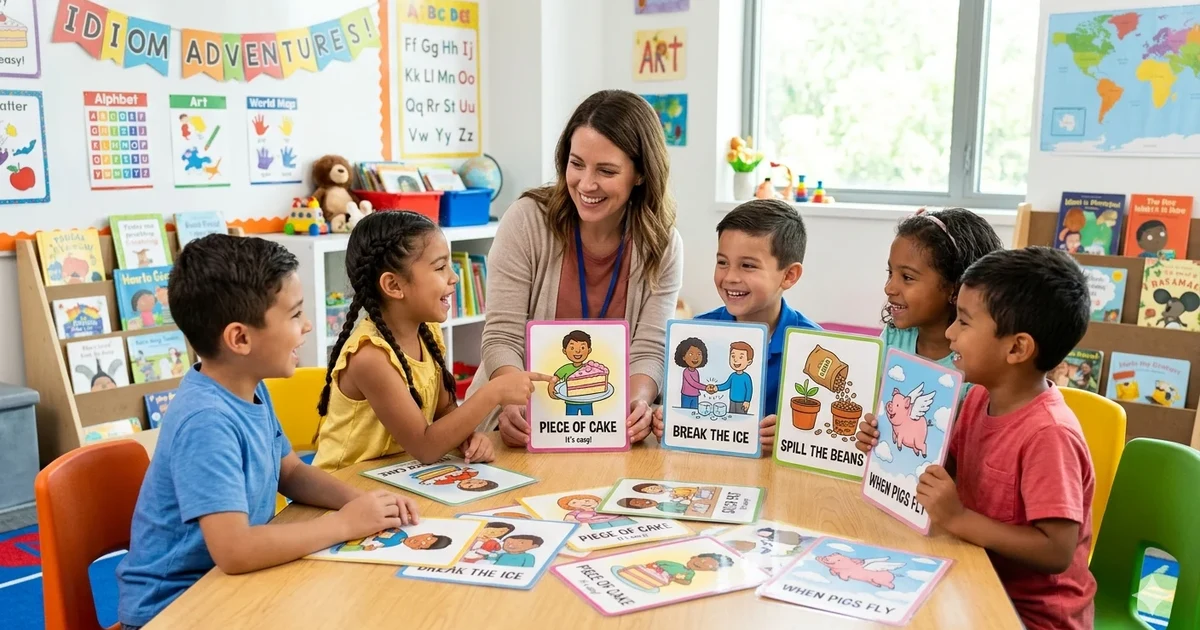
Learning idioms can feel tricky for kids at first. Words do not always mean what they say. This is where pictures help a lot. When children see a funny or clear image, they understand the idea faster and remember it longer.
Idioms for kids with pictures make learning fun and simple. A child can connect the phrase with a visual scene. This makes abstract ideas easier to grasp. It also builds confidence in speaking and understanding English.
Parents and teachers often use pictures to explain tough concepts. Idioms are no different. With the right visuals, even young learners can enjoy and use idioms in daily life without confusion.
Meaning of Idioms for Kids with Pictures
An idiom is a phrase that has a special meaning. The meaning is different from the actual words. For example, “piece of cake” does not mean a real cake. It means something is very easy.
For kids, this can be confusing at first. That is why pictures play an important role. A simple image can show what the idiom really means. It helps children connect words with ideas in a natural way.
When kids learn idioms through pictures, they do not just memorize. They understand. This makes it easier for them to use idioms in real conversations. Over time, their vocabulary grows, and they feel more comfortable with the language.
Why Use Idioms for Kids Learning with Pictures
Pictures make learning faster and more fun. Kids enjoy visuals, and they stay focused longer. This method also improves memory and understanding.
Common Idioms for Kids Pictures List
Break the Ice
Meaning: To start a conversation in a friendly way
Uses: People use it when meeting someone new or starting a group talk
Example: He told a joke to break the ice at the party
Hit the Sack
Meaning: To go to sleep
Uses: Kids use it when they feel tired at night
Example: I am very sleepy, I will hit the sack now
Piece of Cake
Meaning: Something very easy
Uses: Used when a task feels simple and quick
Example: The test was a piece of cake
Let the Cat Out of the Bag
Meaning: To reveal a secret
Uses: Used when someone shares something they should not
Example: She let the cat out of the bag about the surprise
Under the Weather
Meaning: Feeling sick
Uses: Kids use it when they are not feeling well
Example: I stayed home because I felt under the weather
Spill the Beans
Meaning: To tell a secret
Uses: Used when someone shares hidden information
Example: He spilled the beans about the plan
Once in a Blue Moon
Meaning: Very rarely
Uses: Used when something does not happen often
Example: We eat fast food once in a blue moon
A Blessing in Disguise
Meaning: Something good that seemed bad at first
Uses: Used to explain unexpected positive results
Example: Missing the bus was a blessing in disguise
Kill Two Birds with One Stone
Meaning: Do two things at once
Uses: Used when completing multiple tasks together
Example: I finished homework and cleaned my room, killing two birds with one stone
Bite the Bullet
Meaning: To face something difficult
Uses: Used when someone decides to handle a tough situation
Example: She bit the bullet and finished her project
Cut Corners
Meaning: To do something poorly to save time
Uses: Used when someone skips important steps
Example: Do not cut corners on your homework
On Cloud Nine
Meaning: Very happy
Uses: Used when someone feels excited or joyful
Example: She was on cloud nine after winning the prize
The Ball is in Your Court
Meaning: It is your turn to act
Uses: Used when someone must make a decision
Example: I have done my part, now the ball is in your court
Burn the Midnight Oil
Meaning: To work late at night
Uses: Used when someone studies or works late
Example: He burned the midnight oil before exams
Jump on the Bandwagon
Meaning: To follow what others are doing
Uses: Used when someone joins a trend
Example: Everyone jumped on the bandwagon of the new game
Hit the Nail on the Head
Meaning: To say something exactly right
Uses: Used when someone gives the correct answer
Example: She hit the nail on the head with her idea
Pull Someone’s Leg
Meaning: To joke or tease
Uses: Used in friendly teasing
Example: I was just pulling your leg
Add Fuel to the Fire
Meaning: To make a situation worse
Uses: Used when actions increase anger or problems
Example: His comments added fuel to the fire
Costs an Arm and a Leg
Meaning: Very expensive
Uses: Used when something is too costly
Example: That toy costs an arm and a leg
Beat Around the Bush
Meaning: To avoid the main topic
Uses: Used when someone does not speak directly
Example: Stop beating around the bush and say it clearly
Practical Usage of Idioms for Kids with Pictures
Kids learn best when they use what they study in real life. Idioms become easier when children hear them in daily conversations. Pictures help first, but practice makes them stick.
Parents and teachers can use simple moments to introduce idioms. Talking during playtime or homework helps kids understand naturally. This keeps learning relaxed and fun.
Examples:
- A child says the homework was easy and calls it a piece of cake
- A parent tells a joke to break the ice at a family gathering
- A teacher says do not cut corners during a class task
- A kid tells a friend stop pulling my leg during a joke
- A student says I will hit the sack after finishing homework
Idioms for Kids Pictures Comparison Table
| Aspect | Hard Learning | Smart Learning with Pictures |
|---|---|---|
| Understanding | Slow and confusing | Quick and clear |
| Memory | Easy to forget | Easy to remember |
| Engagement | Boring for kids | Fun and interesting |
| Usage | Less practical | More natural in speech |
| Confidence | Low confidence | Builds confidence |
How to Use Idioms for Kids Pictures
Use simple methods to make learning easy
- Start with common and easy idioms
- Show clear and fun pictures
- Explain meaning in simple words
- Use idioms in daily talk
- Encourage kids to create their own examples
Common Mistakes in Idioms for Kids Pictures
Avoid these common problems while teaching
- Teaching too many idioms at once
- Using difficult phrases too early
- Skipping explanation of meaning
- Choosing unclear or confusing images
- Not practicing in real conversations
FAQs About Idioms for Kids Pictures
What are idioms for kids with pictures?
They are phrases taught using images to make meaning clear and simple
Why should kids learn idioms with pictures?
Pictures make learning faster and more enjoyable
What is the best age to teach idioms?
Kids can start learning basic idioms around age 6
Are idioms hard for children?
They can be confusing, but pictures make them easier
How do pictures help in learning idioms?
They show the idea behind the phrase clearly
Can kids use idioms in daily speech?
Yes, with practice they can use them naturally
What are easy idioms for beginners?
Piece of cake and hit the sack are good starters
How can parents teach idioms at home?
Use daily conversation and simple examples
Do idioms improve vocabulary?
Yes, they make language richer and more expressive
How many idioms should kids learn at once?
Start with a few and add more slowly
Are idioms important in English learning?
Yes, they help in understanding real conversations
Can pictures replace explanations?
No, both together work best
Conclusion
Idioms may look confusing at first, but they become simple with the right approach. Pictures make a big difference. They turn abstract phrases into something kids can see and understand. This helps children learn faster and remember longer.
With regular practice and simple guidance, kids can start using idioms in daily life. Keep the learning fun and natural. Over time, their confidence will grow, and they will enjoy using new expressions without hesitation.