Quick Answer:
What are idioms about sleeping?
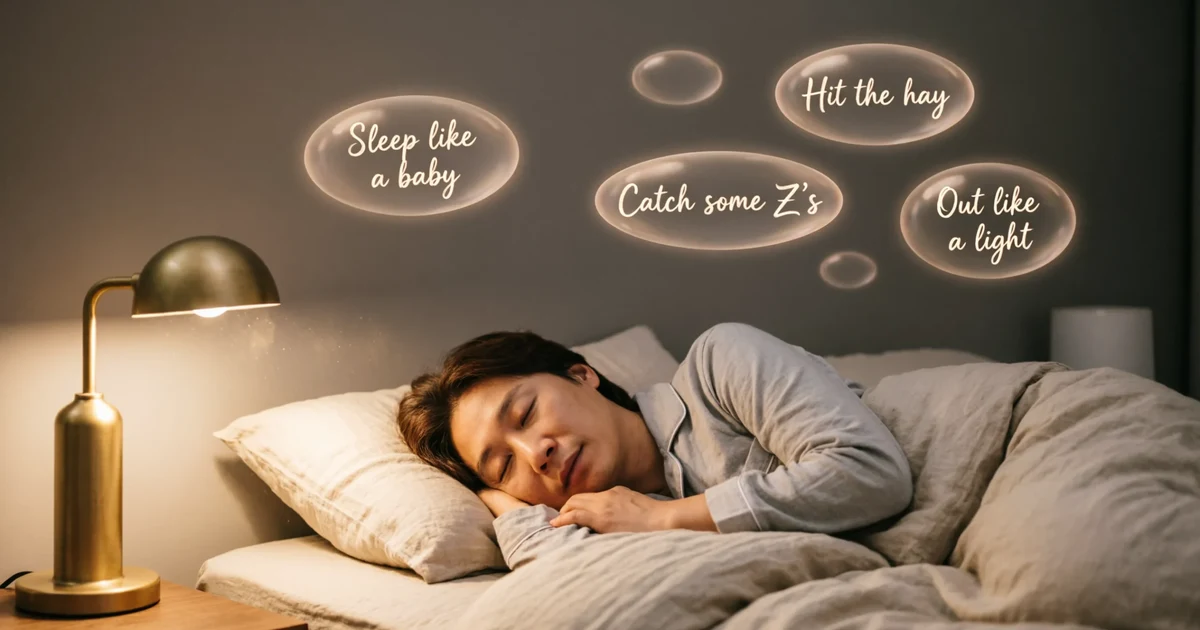
Idioms about sleeping are common English phrases that use sleep-related words to express everyday ideas, feelings, or situations.
Introduction
Sleep shows up in everyday talk more than we notice. People use simple phrases to describe how well they slept, how tired they feel, or even how they make decisions. These phrases are called idioms. They do not mean exactly what the words say, but people understand them easily in daily life.
Idioms about sleeping help you sound more natural in English. Instead of saying “I slept very deeply,” someone might say “I slept like a log.” It feels more lively and real. You will hear these in casual chats, movies, and even social media.
Learning these idioms also improves your listening skills. When someone says they will “sleep on it,” they do not mean going to bed right away. They mean they need time to think. Once you understand this, conversations become much clearer and more enjoyable.
Meaning and Definition of Sleeping Idioms
Sleeping idioms are phrases that use the idea of sleep to express different meanings. These meanings often go beyond actual rest. They can describe emotions, decisions, habits, or even personality traits.
For example, saying someone is a “light sleeper” tells you about their sleep pattern. Saying “burn the midnight oil” talks about staying awake to work. So, these idioms connect sleep with real life situations in a simple way.
People use sleeping idioms to make speech more expressive. They add color and feeling to basic ideas. Instead of plain sentences, you get something more vivid and easy to remember. That is why these idioms are so common in everyday English.
Common Idioms About Sleeping (Top 20)
Sleep like a log
Meaning: Sleep very deeply without waking up
Uses: People say this when they had a long and peaceful sleep
Example: I slept like a log after that long trip
Sleep like a baby
Meaning: Sleep peacefully without disturbance
Uses: Often used when someone feels relaxed and calm before sleep
Example: She slept like a baby after finishing her work
Hit the sack
Meaning: Go to bed
Uses: Used casually when someone feels tired and wants to sleep
Example: I am tired, I will hit the sack early tonight
Hit the hay
Meaning: Go to bed to sleep
Uses: Similar to hit the sack, used in informal speech
Example: Let’s hit the hay, we have an early start
Catch some Z’s
Meaning: Get some sleep
Uses: Common in casual conversations among friends
Example: I need to catch some Z’s before the meeting
Forty winks
Meaning: A short nap
Uses: Used when someone takes a quick rest during the day
Example: I took forty winks during lunch break
Dead to the world
Meaning: In a very deep sleep
Uses: Said when someone does not wake up easily
Example: He was dead to the world after the long flight
Sleep tight
Meaning: Sleep well
Uses: Often said as a kind wish before bedtime
Example: Good night, sleep tight
Out like a light
Meaning: Fall asleep very quickly
Uses: Used when someone sleeps instantly
Example: He was out like a light after dinner
Not sleep a wink
Meaning: Not sleep at all
Uses: Used when someone feels stressed or restless
Example: I did not sleep a wink last night
Toss and turn
Meaning: Move a lot while trying to sleep
Uses: Used when someone cannot sleep peacefully
Example: I kept tossing and turning all night
Beauty sleep
Meaning: Sleep that helps you look fresh
Uses: Often used in a light or humorous way
Example: I need my beauty sleep before the event
Burn the midnight oil
Meaning: Stay awake late to work
Uses: Used when someone studies or works late at night
Example: She burned the midnight oil to finish the project
Let sleeping dogs lie
Meaning: Avoid trouble by not bringing up issues
Uses: Used in situations where silence is better
Example: Just let sleeping dogs lie and move on
Sleep on it
Meaning: Delay a decision until later
Uses: Used when someone needs time to think
Example: I will sleep on it before deciding
Fast asleep
Meaning: Sleeping deeply
Uses: Used in normal daily situations
Example: The baby is fast asleep
Light sleeper
Meaning: Someone who wakes up easily
Uses: Used to describe sleep habits
Example: I am a light sleeper, even small noise wakes me
Heavy sleeper
Meaning: Someone who sleeps deeply
Uses: Used to describe someone hard to wake
Example: He is a heavy sleeper, alarms do not work
Sleep with one eye open
Meaning: Stay alert even while resting
Uses: Used in situations where safety is a concern
Example: He slept with one eye open in that place
Cry oneself to sleep
Meaning: Fall asleep while crying
Uses: Used in emotional situations
Example: She cried herself to sleep after the argument
Practical Usage of Idioms About Sleeping in Daily Life
People use these idioms in normal conversations without thinking much. They come up when talking about tiredness, stress, or daily routines. Once you start noticing them, you will hear them everywhere.
You can use them at home, with friends, or even at work in casual settings. They make your speech sound more natural and less formal. Just pick the right idiom for the situation.
Real-life examples:
- I could not sleep at all, I did not sleep a wink last night
- After the gym, I was out like a light
- Let me sleep on it before I give you an answer
- He always burns the midnight oil before exams
- I took forty winks during my break
- She sleeps like a baby when she feels relaxed
Idioms About Sleeping Comparison Table
| Idiom | Meaning | When to Use |
|---|---|---|
| Sleep like a log | Deep sleep | After physical exhaustion |
| Sleep like a baby | Peaceful sleep | When feeling relaxed |
| Hit the sack | Go to bed | Casual daily talk |
| Catch some Z’s | Get sleep | Informal situations |
| Not sleep a wink | No sleep | Stress or worry |
| Burn the midnight oil | Work late | Study or deadlines |
| Sleep on it | Delay decision | When unsure |
| Light sleeper | Wakes easily | Describing habits |
| Heavy sleeper | Sleeps deeply | Describing habits |
How to Use Idioms About Sleeping Correctly
Use these idioms naturally in your daily conversations
- Match the idiom with the situation
- Keep your tone casual and friendly
- Do not overuse too many idioms together
- Learn meanings before using them
- Practice with real conversations
Common Mistakes When Using Sleeping Idioms
Avoid simple errors to sound more natural
- Using idioms in the wrong context
- Mixing two idioms in one sentence
- Taking idioms too literally
- Using informal idioms in formal writing
- Forgetting the correct structure
Conclusion
Idioms about sleeping make everyday English feel more natural and lively. They help you express simple ideas in a more interesting way. Instead of plain sentences, you can share feelings and situations with more clarity and emotion.
Start using a few idioms in your daily talk. Do not try to learn all at once. With practice, they will become part of your normal speech. Over time, you will understand them better and use them without thinking.
FAQs About Idioms About Sleeping
What are idioms about sleeping?
They are phrases that use sleep to express ideas beyond literal meaning
What does sleep like a log mean?
It means sleeping very deeply
How can I use sleeping idioms in sentences?
Use them in casual speech based on the situation
Are sleeping idioms formal or informal?
Most are informal and used in daily conversation
What is the difference between hit the sack and hit the hay?
Both mean go to bed, with no major difference
Why do people say catch some Z’s?
It is a fun way to say get some sleep
Can sleeping idioms be used in writing?
Yes, but mostly in informal or creative writing
What does not sleep a wink mean?
It means no sleep at all
How do I remember sleeping idioms easily?
Practice them in daily conversation
Are sleeping idioms common in English?
Yes, they are used very often
What does burn the midnight oil mean?
It means working late at night