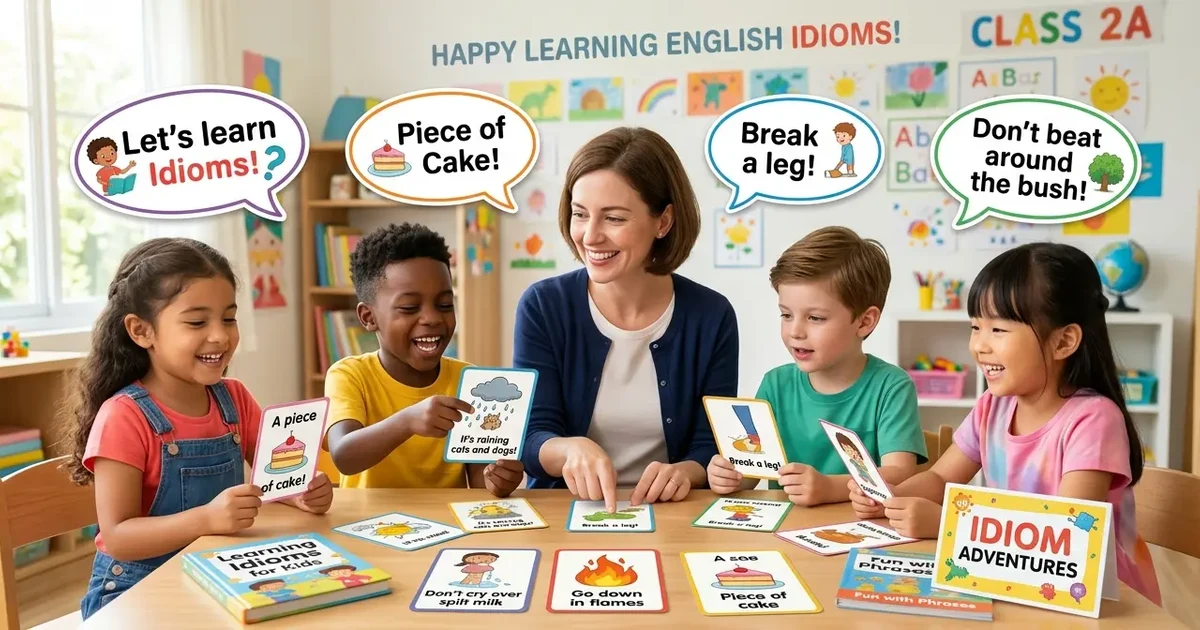
Quick Answer Box: Idioms for Kids
What are idioms for kids?
Idioms for kids are special phrases that have meanings different from the exact words. They help children improve vocabulary and understand everyday English conversations.
Why should kids learn idioms?
Kids should learn idioms because they make speaking and writing more interesting. They also help children understand stories, movies, and real-life conversations.
Introduction
Idioms make the English language more colorful and interesting. They are special expressions that do not always mean exactly what the words say. Kids often hear idioms in stories, cartoons, movies, and daily conversations. Learning these expressions helps children understand what people really mean and improves their communication skills.
Many children find idioms confusing at first because the meaning can be different from the actual words. For example, when someone says “a piece of cake,” they are not talking about food. They mean something is very easy. Simple explanations and regular practice can help kids learn these phrases naturally.
Learning idioms for kids is a fun way to build vocabulary and become more confident in speaking and writing. These expressions help children understand jokes, stories, and conversations better. With the right examples, even young learners can enjoy discovering new idioms and using them correctly in everyday life.
Meaning and Definition of Idioms for Kids
Idioms are groups of words that have a special meaning different from their direct or literal meaning. People use idioms to express ideas in a creative and memorable way. Instead of saying something in a plain manner, an idiom adds more feeling and personality to the sentence.
For kids, idioms can seem like tricky phrases because the words may describe something completely different from the actual message. Understanding the meaning behind these phrases helps children follow conversations and enjoy reading materials more easily. Idioms are common in English lessons, books, and everyday speech.
English idioms for kids are usually simple and fun to learn. They help young learners improve their language skills while making conversations more natural. When children learn common idioms with meanings and examples, they can use them confidently in school, writing tasks, and daily communication.
Common Idioms for Kids: 20 Easy Idioms With Simple Meanings
A Piece of Cake
Meaning: Something that is very easy to do.
Uses: People use this idiom when they want to say that a task does not require much effort. It is common when talking about easy homework, activities, or challenges.
Example: The math quiz was a piece of cake for Sara because she practiced well.
Break a Leg
Meaning: A way to wish someone good luck.
Uses: People often use this phrase before performances, competitions, or important events. It is a friendly way to encourage someone.
Example: “Break a leg,” Mom said before Ali performed on stage.
Hit the Nail on the Head
Meaning: To say or do something exactly right.
Uses: This idiom is used when someone gives the correct answer or explains something perfectly. It often appears during discussions and problem solving.
Example: Emma hit the nail on the head when she explained why the plant was dying.
Once in a Blue Moon
Meaning: Something that happens very rarely.
Uses: People use this phrase when an event does not happen often. It helps describe unusual or special moments.
Example: We visit the old village once in a blue moon.
Let the Cat Out of the Bag
Meaning: To reveal a secret by mistake.
Uses: This idiom is used when someone shares information that was supposed to stay private. It often happens during surprises.
Example: Tom let the cat out of the bag about the birthday gift.
Under the Weather
Meaning: Feeling sick or not feeling well.
Uses: People use this expression when they feel tired, weak, or slightly ill. It is a polite way to describe feeling unwell.
Example: I stayed home from school because I was feeling under the weather.
A Bed of Roses
Meaning: A situation that is easy and comfortable.
Uses: This phrase describes a life or experience without many problems. People often use it when talking about challenges.
Example: Learning a new skill is not always a bed of roses.
Spill the Beans
Meaning: To tell a secret or reveal information.
Uses: People use this idiom when someone shares hidden details. It is often used in friendly conversations.
Example: Mia spilled the beans about the surprise party.
The Early Bird Catches the Worm
Meaning: People who act early often get better opportunities.
Uses: This idiom encourages children to be punctual and prepared. It is often used to teach the value of starting tasks early.
Example: Sam finished his project first because he knew the early bird catches the worm.
When Pigs Fly
Meaning: Something that will probably never happen.
Uses: People use this phrase to describe something impossible or very unlikely. It is usually said in a funny way.
Example: Jake said he would clean his room every day when pigs fly.
Common Idioms for Kids: 20 Easy Idioms With Simple Meanings
Cost an Arm and a Leg
Meaning: Something that is very expensive.
Uses: People use this idiom when talking about things that cost a lot of money. It helps describe high prices in a simple way.
Example: That new bicycle costs an arm and a leg, so I will save money for it.
Bite the Bullet
Meaning: To face something difficult with courage.
Uses: People use this phrase when someone decides to handle a hard situation instead of avoiding it. It teaches children to be brave.
Example: Sara bit the bullet and gave her speech in front of the whole class.
Hold Your Horses
Meaning: To wait and be patient.
Uses: People use this idiom when someone is rushing or acting too quickly. It reminds others to slow down and think.
Example: Hold your horses, we need to check the answers before submitting the test.
Barking Up the Wrong Tree
Meaning: Looking in the wrong place or blaming the wrong person.
Uses: This phrase is used when someone has the wrong idea about a situation. It helps explain mistakes in thinking.
Example: You are barking up the wrong tree because Mark did not break the toy.
Raining Cats and Dogs
Meaning: Raining very heavily.
Uses: People use this funny expression to describe strong rainfall. It is common in stories and casual conversations.
Example: We stayed inside because it was raining cats and dogs outside.
Add Fuel to the Fire
Meaning: To make a bad situation worse.
Uses: People use this idiom when someone does something that increases a problem. It helps explain actions that create more trouble.
Example: Laughing at his mistake only added fuel to the fire.
Keep an Eye On
Meaning: To watch or look after something carefully.
Uses: People use this phrase when they want someone to take care of a person or thing. It is common in daily conversations.
Example: Please keep an eye on my bag while I get some water.
In Hot Water
Meaning: To be in trouble.
Uses: This idiom is used when someone faces a problem because of a mistake. It often describes situations at home or school.
Example: Ahmed was in hot water after forgetting his homework.
The Ball Is in Your Court
Meaning: It is your turn to make a decision or take action.
Uses: People use this phrase when responsibility moves to another person. It encourages someone to make the next move.
Example: I shared my idea, so now the ball is in your court.
Out of the Blue
Meaning: Something that happens unexpectedly.
Uses: People use this idiom when something surprising happens without warning. It is common when describing sudden events.
Example: My old friend called me out of the blue after many years.
Practical Usage of Idioms for Kids in Daily Conversations
Idioms become easier for children when they see how people use them in real situations. Kids can find idioms in classroom talks, family conversations, books, and videos. These phrases make speaking more interesting and help children express feelings in a natural way.
Using idioms correctly takes practice. Children should first understand the meaning and then try using them in suitable situations. A simple conversation with family or friends can be a great place to practice new expressions.
Real life examples of using idioms:
- A student finishes a difficult project quickly and says, “That project was a piece of cake.”
- A child wishes a friend good luck before a school play by saying, “Break a leg.”
- A parent tells a child to wait before opening a gift by saying, “Hold your horses.”
- A teacher explains that a student gave the correct answer by saying, “You hit the nail on the head.”
- A child feels sick before school and tells a parent, “I am feeling under the weather.”
- Friends talk about a surprise party, and one child accidentally reveals the plan by spilling the beans.
Idioms for Kids Comparison Table: Literal Meaning vs Figurative Meaning
| Idiom | Literal Meaning | Figurative Meaning |
|---|---|---|
| A Piece of Cake | A slice of cake | Something very easy |
| Break a Leg | Breaking a body part | Wishing good luck |
| Spill the Beans | Dropping beans | Revealing a secret |
| Under the Weather | Being below the weather | Feeling sick |
| Raining Cats and Dogs | Animals falling from the sky | Heavy rain |
| Cost an Arm and a Leg | Losing body parts | Very expensive |
| Hold Your Horses | Holding horses | Waiting patiently |
| Out of the Blue | Coming from a blue place | Happening suddenly |
| In Hot Water | Being inside hot water | Being in trouble |
| When Pigs Fly | Pigs flying | Something impossible |
How to Use Idioms for Kids in Sentences
Using idioms becomes easier when children understand the situation first.
- Learn the meaning of an idiom before using it in a sentence.
- Use idioms in conversations where they match the situation.
- Practice idioms by writing short sentences or stories.
- Listen to how people use idioms in books, movies, and daily talks.
- Avoid changing the words of an idiom because it can change the meaning.
Common Mistakes When Using Idioms for Kids
Children can avoid mistakes by learning how idioms work in real conversations.
- Do not understand an idiom only by its literal meaning.
- Do not use an idiom when it does not match the situation.
- Do not change the words or order of an idiom.
- Do not use too many idioms in one sentence.
- Do not memorize idioms without learning their meanings.
Conclusion
Idioms for kids are a great way to make English learning more enjoyable and creative. These expressions help children understand conversations, improve their vocabulary, and speak with more confidence. When kids learn common idioms with simple meanings and examples, they can use them naturally in school and daily life.
Learning idioms does not have to feel difficult. A little practice through reading, talking, and listening can make a big difference. Children can start with easy phrases and slowly explore more expressions as their language skills grow. With time, idioms become a fun part of learning English and help kids express their thoughts in a more colorful way.
FAQs About Idioms for Kids
What are idioms for kids?
Idioms for kids are special phrases with meanings different from the exact words. They help children learn English in a fun way.
Why should children learn idioms?
Children should learn idioms because they improve vocabulary, speaking skills, and understanding of everyday conversations.
What are some easy idioms for kids to learn?
Easy idioms for kids include a piece of cake, break a leg, hold your horses, and spill the beans.
How can kids understand idioms easily?
Kids can understand idioms by learning their meanings, reading examples, and practicing them in daily conversations.
What is the difference between idioms and normal phrases?
Normal phrases usually have direct meanings, while idioms have special meanings that are different from the words used.
How many idioms should a child learn?
A child can start with a few common idioms and slowly learn more through practice and reading.
What are common English idioms used by kids?
Common English idioms for kids include once in a blue moon, under the weather, and a piece of cake.
How can idioms improve children’s vocabulary?
Idioms introduce new expressions and help children communicate ideas in a more creative way.
Are idioms difficult for young learners?
Some idioms may seem difficult at first, but simple explanations and examples make them easier to understand.
Where can kids practice learning idioms?
Kids can practice idioms through storybooks, classroom activities, conversations, and educational games.
What are fun ways to teach idioms to children?
Parents and teachers can use stories, pictures, games, and daily examples to make idioms enjoyable.
How are idioms used in everyday conversations?
People use idioms in everyday conversations to express ideas, feelings, and situations in a simple and interesting way.