Quick Answer
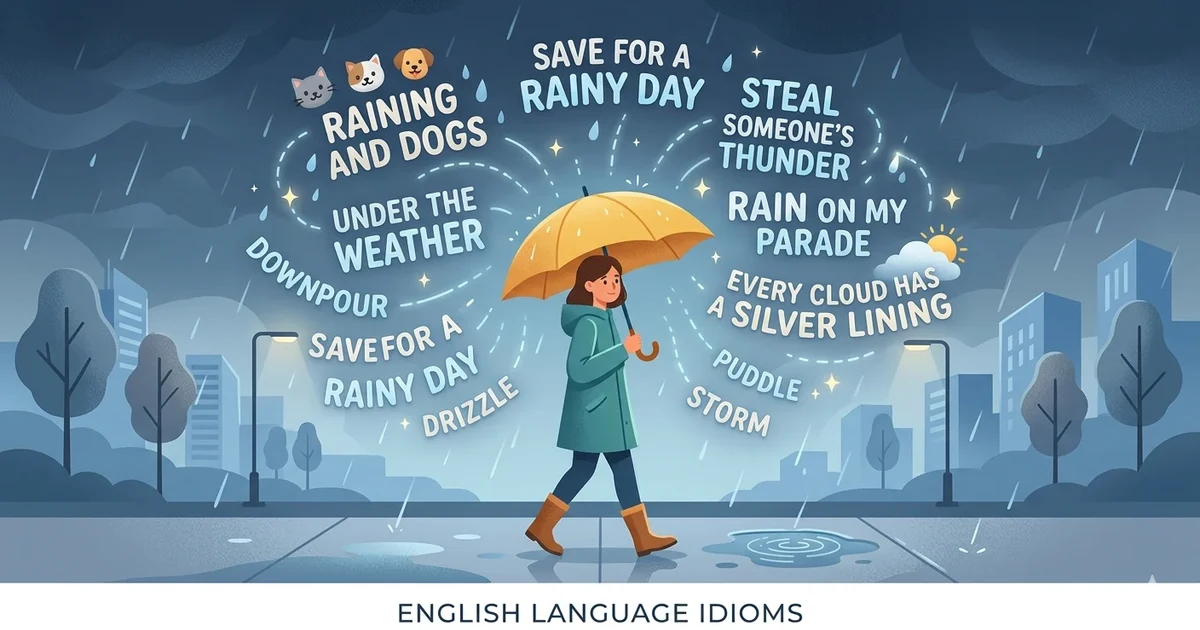
Idioms for rain are expressions that use rain related words to describe feelings, situations, or life events in a creative way. They often do not refer to real weather but show emotions like problems, hope, or change. These idioms help make English more natural and expressive in daily communication.
Introduction
Idioms for rain are common expressions in English that describe weather, emotions, and life situations using rain related ideas. People use them in daily speech to sound more natural and expressive. These idioms do not always mean real rain. Most of the time, they show feelings, situations, or events in a creative way.
Rain idioms appear in both spoken and written English. You will hear them in conversations, movies, and even news reports. They help speakers explain ideas in a simple but colorful way. For example, instead of saying something difficult is happening, someone might use a rain idiom to make the meaning clearer.
Learning idioms for rain also improves your understanding of English culture. Native speakers often use these phrases without thinking. If you understand them, you can follow conversations better and speak more naturally. These idioms also help you express emotions like stress, relief, or hope in a better way.
Meaning or Definition Idioms for Rain Definition and Related Search Queries Weather Idioms Meaning
Idioms for rain are phrases that use rain or weather related words to express a deeper meaning. They do not describe weather literally in most cases. Instead, they show emotions, life situations, or common human experiences.
These idioms often talk about problems, challenges, good times, or sudden changes in life. Rain usually connects with difficulty or change, so many idioms use it to explain emotional or real life situations.
People search for rain idioms to understand English expressions, improve fluency, and learn natural speaking style. These idioms also help in exams, writing tasks, and daily communication.
Common Idioms for Rain List Rain Idioms Examples
Practical Usage Idioms for Rain in Daily Conversation Usage Contexts Weather Expressions
Idioms for rain fit easily into daily English conversations. People use them when talking about plans, problems, emotions, or even casual situations. These idioms make speech more natural and expressive.
You will notice them in friendly talks, school discussions, and online chats. They also appear when people share experiences about life challenges or unexpected events.
Examples in real life:
- I will take a rain check on dinner because I am busy today
- It started raining cats and dogs while we were coming home from school
- She always saves money for a rainy day
- We had to weather the storm during exams this semester
- After the argument, things finally became calm after the storm
- He said he will come come rain or shine for the match
Comparison Table Idioms for Rain vs Other Weather Idioms Comparison Table Usage Differences
| Idioms for Rain | Other Weather Idioms | Difference |
|---|---|---|
| Focus on problems and emotions | Cover all weather conditions | Rain idioms are more emotional |
| Often show difficulty or change | Can show mood or situation | Rain links to life struggles |
| Used in casual speech | Used in formal and informal speech | Rain idioms are more informal |
How to Use Idioms for Rain in English Speaking and Writing
Idioms for rain sound natural when used correctly in real communication.
- Use idioms in daily speaking practice
- Match idioms with correct emotional situations
- Keep sentences simple when using idioms
- Practice in short conversations with friends
- Avoid using too many idioms in formal writing
Common Mistakes Using Idioms for Rain
Many learners misuse rain idioms in English conversations.
- Using idioms in the wrong situation
- Translating idioms word by word
- Overusing idioms in one conversation
- Mixing literal and figurative meaning
- Forgetting correct sentence structure
Idioms for Rain – 20 Common Rain Idioms
It’s raining cats and dogs
Meaning: Very heavy rain
Uses: People use it to describe sudden strong rainfall in daily life
Example: It was raining cats and dogs when we left the house
Come rain or shine
Meaning: No matter what happens
Uses: Used when someone stays committed in any situation
Example: He supports his team come rain or shine
Save for a rainy day
Meaning: Save money for future problems
Uses: Used when planning for financial security
Example: She saves part of her salary for a rainy day
A storm in a teacup
Meaning: Small problem made big
Uses: Used for unnecessary drama over small issues
Example: Their argument was just a storm in a teacup
Rain check
Meaning: Postpone plans
Uses: Used when someone delays an invitation or meeting
Example: I will take a rain check on lunch today
Take a rain check
Meaning: Refuse now but accept later
Uses: Used politely in social plans
Example: He took a rain check on the movie night
In the eye of the storm
Meaning: Center of trouble
Uses: Used when someone is in a difficult situation
Example: She was in the eye of the storm during the debate
Under the weather
Meaning: Feeling sick
Uses: Used to describe mild illness
Example: I am feeling under the weather today
Rain on someone’s parade
Meaning: Spoil someone’s happiness
Uses: Used when someone ruins a good moment
Example: Don’t rain on her parade after the success
When it rains it pours
Meaning: Problems come together
Uses: Used when many issues happen at once
Example: When it rains it pours during exam week
Weather the storm
Meaning: Survive difficulty
Uses: Used for handling tough situations
Example: They managed to weather the storm in business
Every cloud has a silver lining
Meaning: Good comes from bad
Uses: Used for hope in hard times
Example: Losing the job helped him start fresh, every cloud has a silver lining
Chase rainbows
Meaning: Pursue impossible dreams
Uses: Used when someone chases unrealistic goals
Example: He is chasing rainbows with that idea
Break the storm
Meaning: End a difficult phase
Uses: Used when problems start to settle
Example: Things finally began to break the storm at home
After the storm comes calm
Meaning: Peace after trouble
Uses: Used when stress or conflict ends
Example: After the storm comes calm in their relationship
Storm brewing
Meaning: Trouble starting
Uses: Used when problems are about to begin
Example: There is a storm brewing in the office
Pouring down
Meaning: Very heavy rain
Uses: Used in weather conversations
Example: It was pouring down all evening
Rain or shine commitment
Meaning: Always present or active
Uses: Used for strong dedication
Example: He attends training rain or shine
Walking on sunshine after rain
Meaning: Feeling happy after sadness
Uses: Used when mood improves after problems
Example: She felt like walking on sunshine after rain
Drenched in rain
Meaning: Completely wet from rain
Uses: Used in everyday weather situations
Example: We got drenched in rain on the way home
Idioms for Rain FAQs and Search Queries
What are idioms for rain in English?
They are phrases that use rain words to express feelings or situations.
What does raining cats and dogs mean?
It means very heavy rain.
How do you use rain idioms in sentences?
You use them to describe emotions, weather, or life situations.
What is the meaning of save for a rainy day?
It means saving money for future problems.
Is rain check formal or informal?
It is mostly informal but polite.
What does weather the storm mean?
It means to survive a difficult situation.
Why do people use rain idioms?
They make English more natural and expressive.
What is the meaning of under the weather?
It means feeling slightly sick.
Are rain idioms common in English speaking?
Yes, native speakers use them often.
How can I learn rain idioms fast?
Practice them in daily conversations and writing.
Conclusion
Idioms for rain make English more expressive and natural. They help you talk about weather, emotions, and life situations in a simple but creative way. Once you understand them, you can follow conversations more easily and speak with more confidence.
These idioms also show how language connects with real life experiences. Rain often represents change, struggle, or emotion, so these expressions feel meaningful in daily use. When you use them correctly, your English sounds more fluent and natural.
Keep practicing a few idioms every day instead of learning too many at once. With time, they will become part of your natural speech.