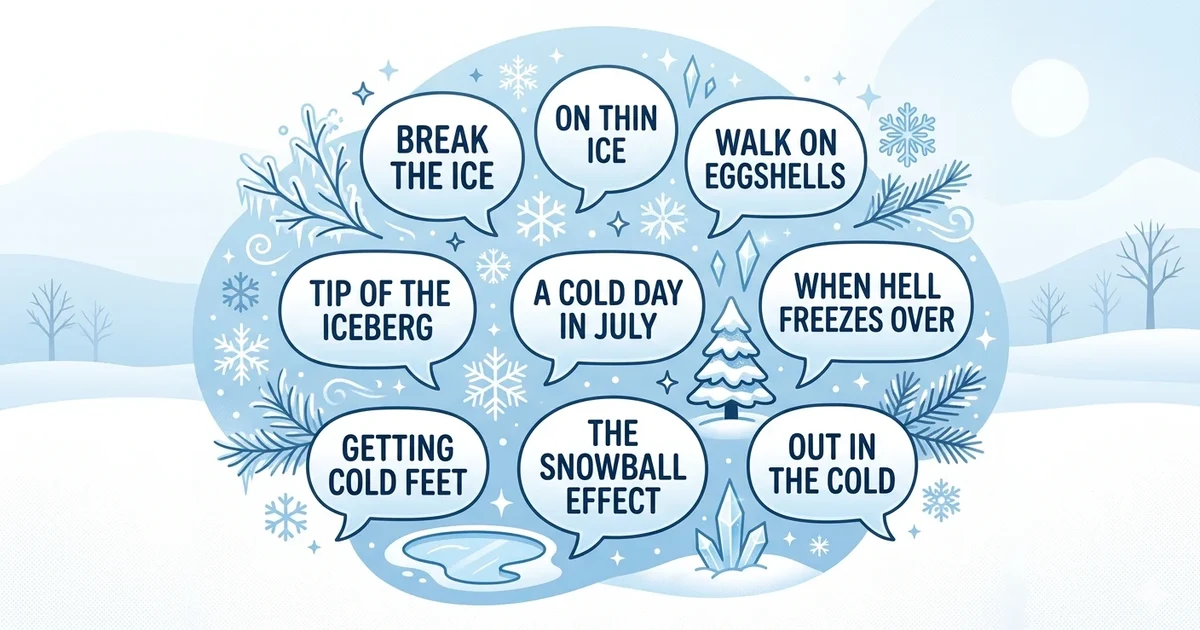
Quick Answer: Snow Idioms
Snow idioms are expressions that use snow, ice, or winter words to describe real life situations. They do not have literal meanings. Instead, they explain feelings, problems, or actions in a simple and natural way.
Introduction
Snow idioms bring a cool and vivid touch to everyday English. They use images of snow, ice, and winter to explain feelings, situations, and behavior. You may hear them in movies, casual chats, or even at work. People use these expressions without thinking about real snow. They simply help describe something in a more colorful way.
These idioms often show emotions like pressure, distance, or calmness. For example, someone might say they feel snowed under when work piles up. Another person might say break the ice when they want to start a friendly talk. These phrases feel natural once you understand them. They make your speech sound more fluent and relaxed.
Learning snow idioms also helps you understand native speakers better. You start to notice them in real conversations. Over time, you feel more confident using them in the right moments.
Meaning and Definition of Snow Idioms in English
Snow idioms are expressions that use winter related words but carry a deeper meaning. The words do not stay literal. Instead, they describe real life situations, emotions, or actions in a simple way. These idioms often connect to cold weather, ice, or snow, but the message goes far beyond that.
For example, the phrase on thin ice has nothing to do with walking on frozen water. It actually means you are in a risky situation. In the same way, cold shoulder does not refer to temperature. It means someone is ignoring you. This is how idioms work. They use simple images to explain complex ideas.
Understanding snow idioms helps you read between the lines. You stop taking words at face value. Instead, you focus on the meaning behind them. This skill makes your English sound more natural and easygoing.
Common Snow Idioms List with Popular Expressions
Snowed under
Meaning: Very busy with too much work
Uses: People say this when tasks pile up and feel overwhelming. It fits work or study situations.
Example: I am snowed under with assignments this week.
Pure as the driven snow
Meaning: Completely innocent or honest
Uses: Used when describing someone who seems very clean in behavior or intentions.
Example: She looks as pure as the driven snow.
Break the ice
Meaning: Start a conversation in a relaxed way
Uses: Common in meetings or social events to make people feel comfortable.
Example: He told a joke to break the ice.
Tip of the iceberg
Meaning: A small part of a much bigger issue
Uses: Used when a problem is deeper than it appears.
Example: This error is just the tip of the iceberg.
On thin ice
Meaning: In a risky or dangerous situation
Uses: Said when someone might get into trouble if they continue.
Example: He is on thin ice after missing deadlines.
Ice in your veins
Meaning: Very calm in stressful situations
Uses: Used to describe someone who stays cool under pressure.
Example: She has ice in her veins during exams.
Snowball effect
Meaning: A situation that keeps growing bigger
Uses: Used when small actions lead to larger results over time.
Example: One mistake created a snowball effect.
Snowball’s chance in hell
Meaning: No chance at all
Uses: Said when something is almost impossible.
Example: They have a snowball’s chance in hell of winning.
Walking on thin ice
Meaning: Taking a big risk
Uses: Similar to being in danger due to risky behavior.
Example: You are walking on thin ice with that attitude.
In cold blood
Meaning: Without emotion or mercy
Uses: Used when someone acts in a very cruel or calm way.
Example: The crime was done in cold blood.
Cold shoulder
Meaning: Ignore someone on purpose
Uses: Used in social situations when someone feels left out.
Example: She gave me the cold shoulder.
Freeze someone out
Meaning: Exclude someone intentionally
Uses: Often used in group or social settings.
Example: They tried to freeze him out of the team.
Put something on ice
Meaning: Delay or pause something
Uses: Used when plans are stopped for a while.
Example: We put the project on ice.
Ice breaker
Meaning: Something that helps people relax and talk
Uses: Used in meetings or gatherings to start interaction.
Example: That game was a great ice breaker.
Left out in the cold
Meaning: Ignored or excluded
Uses: Used when someone feels unwanted or forgotten.
Example: He felt left out in the cold.
Cold comfort
Meaning: Small or useless support
Uses: Said when help does not really make things better.
Example: The apology was cold comfort.
Cold snap
Meaning: Sudden period of very cold weather
Uses: Used mostly for weather but sometimes metaphorically.
Example: A cold snap hit the city last night.
Snow job
Meaning: A clever lie or persuasion
Uses: Used when someone tries to mislead others.
Example: That sales pitch was a snow job.
Snowbound
Meaning: Stuck due to heavy snow
Uses: Used for being unable to move or progress.
Example: We were snowbound at home.
Dead of winter
Meaning: The coldest part of winter
Uses: Used to describe the peak cold season or tough times.
Example: It happened in the dead of winter.
Practical Usage of Snow Idioms in Daily Conversations
Snow idioms fit naturally in daily conversations. You can use them at work, school, or even with friends. They help you express feelings quickly without long explanations. When used correctly, they make your speech sound more fluent and relatable.
You do not need to use many idioms at once. Just one well placed idiom can make your sentence stronger. Start simple and notice how others use them. With practice, they will come naturally.
Real life examples:
I am completely snowed under with office work today.
She tried to break the ice by asking a simple question.
You are on thin ice if you keep ignoring the rules.
That small issue turned into a snowball effect.
He gave me the cold shoulder at the party.
Snow Idioms Comparison Table for Easy Understanding
| Situation Type | Snow Idiom Approach | Direct Meaning | When to Use |
|---|---|---|---|
| Busy life | Snowed under | Too much work | Work or study stress |
| Risk | On thin ice | Danger or trouble | Warning someone |
| Social start | Break the ice | Start talking | New meetings |
| Growth | Snowball effect | Growing problem | Chain reactions |
| Ignoring | Cold shoulder | Avoid someone | Social behavior |
How to Use Snow Idioms Correctly in Sentences
Use these tips to sound natural and clear:
- Choose idioms that match the situation
- Do not translate them word by word
- Keep sentences simple and short
- Listen to how others use them
- Practice in daily conversations
Common Mistakes When Using Snow Idioms
Avoid these common errors to stay clear:
- Using idioms in the wrong context
- Mixing two idioms in one sentence
- Overusing idioms in every line
- Taking meanings too literally
- Using outdated or rare expressions
Conclusion
Snow idioms add color and clarity to your English. They help you express ideas in a simple but powerful way. Instead of long explanations, one short phrase can say a lot. This makes your communication feel more natural and engaging.
You do not need to learn all of them at once. Start with a few and use them in real life. Listen to how others speak and slowly build your confidence. Over time, these idioms will become part of your daily language.
Frequently Asked Questions About Snow Idioms
What are snow idioms in English
They are phrases that use snow or ice words to express deeper meanings.
Why should I learn snow idioms
They help you sound more natural and understand real conversations.
Are snow idioms used daily
Yes many people use them in casual and professional talks.
How can I remember snow idioms easily
Practice them in sentences and hear them in real conversations.
Can beginners use snow idioms
Yes start with simple ones like break the ice or snowed under.
Are snow idioms formal or informal
Most are informal but some fit formal situations too.
What is the easiest snow idiom to learn
Break the ice is very common and easy to use.
Do snow idioms have literal meanings
No they are mostly symbolic not literal.
Can I use snow idioms in writing
Yes they work well in blogs stories and casual writing.
How many snow idioms should I use in one sentence
Usually one is enough to keep it clear.