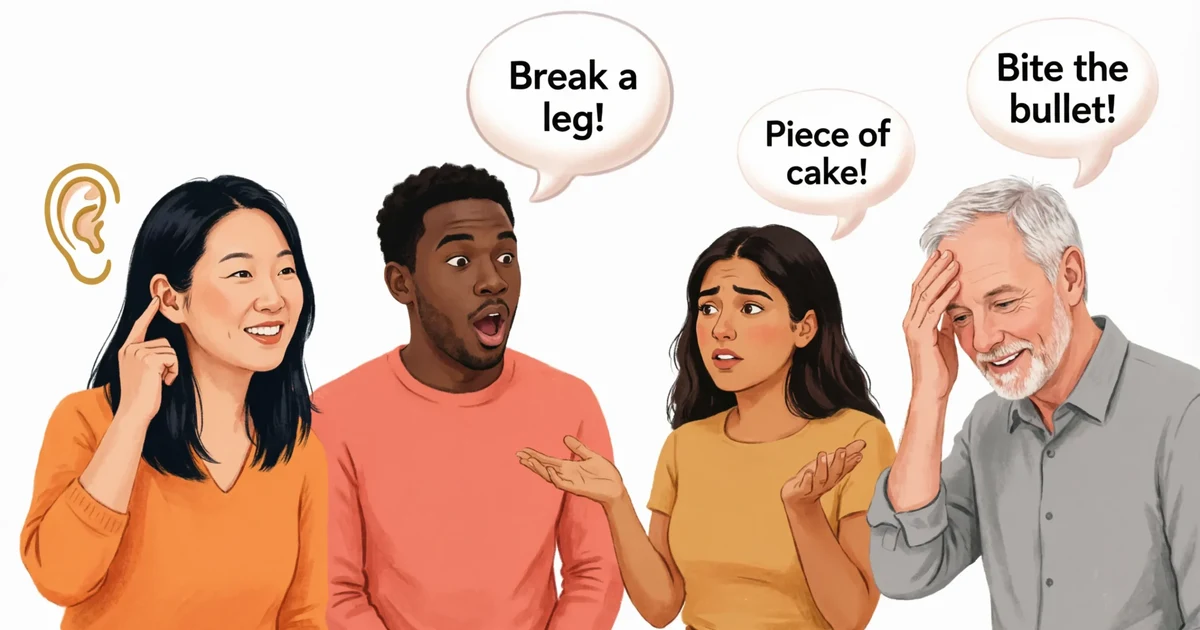
Quick Answer Box
What are idioms about ears?
Idioms about ears are English expressions that use the word “ear” or “ears” to describe listening, attention, communication, or reactions in a non literal way.
Introduction
English idioms make conversations more colorful and expressive. Many common expressions use body parts because people connect them with everyday feelings and actions. Idioms about ears appear often in daily English. People use them while talking about listening, attention, gossip, and understanding.
You may hear these phrases in movies, workplaces, classrooms, or casual chats with friends. Native speakers use them naturally without thinking much about it. That is why learning ear idioms can help you sound more fluent and confident in English conversations.
Some ear idioms sound funny at first. Others may feel confusing because their meanings do not match the actual words. For example, “all ears” has nothing to do with physical ears. It simply means someone listens carefully. Once you understand the real meaning behind these expressions, they become easy to remember and use.
Meaning and Definition of Idioms About Ears
Idioms about ears are expressions that use the word “ear” or “ears” to describe listening, attention, communication, or reactions. These phrases do not always carry a literal meaning. Instead, they express ideas in a more creative and natural way.
People often use ear idioms to talk about good listening habits, ignoring advice, hearing news, or paying attention. These expressions help conversations feel more natural and less formal. They also add emotion and personality to speech.
Learning these idioms can improve both speaking and writing skills. You will understand movies, TV shows, songs, and real conversations more easily. Many English learners know basic vocabulary but struggle with idioms because native speakers use them often in everyday situations. Once you practice them regularly, they start feeling simple and familiar.
Common Idioms About Ears
All Ears
Meaning: Listening very carefully.
Uses: People use this when they want to show full attention during a conversation. It sounds friendly and natural.
Example: Tell me what happened. I’m all ears.
Bend Someone’s Ear
Meaning: To talk too much about something.
Uses: This idiom fits situations where someone keeps talking for a long time, often about personal problems or opinions.
Example: Jake bent my ear for an hour about his new job.
Box Someone’s Ears
Meaning: To hit someone on the side of the head.
Uses: This phrase appears mostly in old-fashioned English or playful warnings.
Example: My grandmother joked that she would box my ears if I lied again.
Fall on Deaf Ears
Meaning: To be ignored.
Uses: People use this when advice, requests, or warnings receive no attention.
Example: My suggestions fell on deaf ears during the meeting.
Go In One Ear and Out the Other
Meaning: To hear something but quickly forget it.
Uses: Parents and teachers often use this expression with children or distracted people.
Example: Everything the coach said went in one ear and out the other.
Have Ears Only for Someone
Meaning: To listen only to one person.
Uses: This idiom often describes romantic attention or strong admiration.
Example: He had ears only for his girlfriend at the party.
Keep Your Ear to the Ground
Meaning: Stay informed about news or changes.
Uses: People use this in business, politics, and social situations.
Example: Keep your ear to the ground for new job openings.
Music to My Ears
Meaning: Something pleasant to hear.
Uses: This phrase expresses happiness after hearing good news.
Example: The words “you got the job” were music to my ears.
Out on Your Ear
Meaning: Forced to leave a place suddenly.
Uses: This idiom often describes losing a job or being thrown out.
Example: He showed up late again and ended up out on his ear.
Play It by Ear
Meaning: Decide things as events happen.
Uses: People use this when they do not want to make fixed plans.
Example: We might go shopping later, but let’s play it by ear.
Reach Someone’s Ears
Meaning: To become known by someone.
Uses: This phrase often describes rumors or news spreading around.
Example: The story finally reached the manager’s ears.
Shut Your Ears to Something
Meaning: Refuse to listen to something.
Uses: People use this when someone ignores advice or criticism on purpose.
Example: She shut her ears to all negative comments.
Turn a Deaf Ear
Meaning: Ignore someone intentionally.
Uses: This idiom commonly appears in serious discussions about problems or complaints.
Example: The company turned a deaf ear to customer concerns.
Walls Have Ears
Meaning: Someone may secretly listen.
Uses: This expression warns people to speak carefully in public places.
Example: Stop talking so loudly. Walls have ears.
Wet Behind the Ears
Meaning: Young and inexperienced.
Uses: People use this for beginners who still lack experience.
Example: He looks confident, but he’s still wet behind the ears.
Up to Your Ears
Meaning: Very busy or deeply involved in something.
Uses: This idiom works well for stressful work or heavy responsibilities.
Example: I’m up to my ears in office work today.
Pin Back Your Ears
Meaning: Listen carefully.
Uses: This phrase often sounds informal and energetic.
Example: Pin back your ears because this story is unbelievable.
Lend an Ear
Meaning: Listen kindly to someone.
Uses: People say this when offering emotional support or attention.
Example: Thanks for lending an ear when I felt upset.
Have Someone’s Ear
Meaning: To receive someone’s attention or influence them.
Uses: This idiom often appears in business or political conversations.
Example: The advisor has the CEO’s ear.
Prick Up Your Ears
Meaning: Suddenly become interested or attentive.
Uses: People use this when hearing surprising or exciting information.
Example: I pricked up my ears when they mentioned free tickets.
Idioms About Ears Meaning and Examples
Ear idioms usually connect with listening, attention, communication, or reactions. Some expressions describe careful listening, while others show ignorance or distraction. These phrases make conversations sound more expressive and natural.
For example, “lend an ear” shows kindness and support. “Turn a deaf ear” gives the opposite meaning because it describes ignoring someone. This difference helps learners understand how context changes meaning in English.
Many native speakers use these idioms without thinking about grammar rules. That is why learning them through real examples works better than memorizing definitions alone.
Popular Ear Idioms in English Language
Ear idioms appear in everyday English across many situations. Students use them in school conversations. Workers use them in meetings. Friends use them during casual chats.
Some idioms sound formal enough for professional settings, while others feel relaxed and playful. “Keep your ear to the ground” works well in workplaces, but “wet behind the ears” sounds more informal.
These expressions also appear in movies, books, podcasts, and TV shows. Once you recognize them, you will start hearing them everywhere.
Funny and Common Ear Idioms for Daily Conversation
Some ear idioms sound amusing because the words create funny mental pictures. Expressions like “all ears” or “walls have ears” often make learners smile when they first hear them.
Despite sounding strange, people use these phrases naturally every day. They help conversations feel less stiff and more human. Using them correctly can also make your English sound smoother and more confident.
Simple idioms usually work best in casual conversation because they feel easy and familiar.
Practical Usage of Ear Idioms
People use ear idioms in real conversations more than many learners realize. These expressions appear during friendly chats, workplace discussions, and even family arguments. They help speakers express feelings quickly without using long explanations.
The best way to learn ear idioms involves hearing them in natural situations. You can notice them in TV shows, podcasts, or conversations with fluent speakers. After some practice, they start feeling normal and easy to remember.
Here are some real life examples:
- My teacher said I never listen because instructions go in one ear and out the other.
- Sara lent an ear when I felt stressed about exams.
- The manager turned a deaf ear to employee complaints.
- We have no fixed travel plans yet. We will play it by ear.
- I pricked up my ears when they talked about a salary increase.
- His apology was music to my ears after our argument.
Comparison Table of Ear Idioms
| Idiom | Main Meaning | Common Situation | Tone |
|---|---|---|---|
| All Ears | Listening carefully | Friendly conversations | Positive |
| Turn a Deaf Ear | Ignoring someone | Complaints or advice | Negative |
| Lend an Ear | Listening kindly | Emotional support | Warm |
| Play It by Ear | Avoid fixed plans | Casual planning | Relaxed |
| Music to My Ears | Hearing good news | Happy moments | Positive |
| Wet Behind the Ears | Inexperienced | Talking about beginners | Informal |
| Keep Your Ear to the Ground | Stay informed | Work or business | Neutral |
How to Use Idioms About Ears Correctly
These simple tips can help you sound more natural when using ear idioms.
- Learn the real meaning before using the idiom
- Practice idioms in short daily conversations
- Listen to native speakers using these expressions
- Match the idiom with the right situation
- Avoid using too many idioms in one sentence
Common Mistakes When Using Ear Idioms
Many learners understand the meaning but still use idioms incorrectly.
- Using idioms in very formal writing
- Changing the original wording of the expression
- Confusing positive and negative meanings
- Translating idioms directly from another language
- Using rare idioms too often in conversation
Conclusion
Idioms about ears add personality and emotion to everyday English. They help speakers express ideas in a shorter and more natural way. Some idioms describe careful listening, while others talk about ignoring advice, hearing news, or staying informed.
Learning these expressions may feel difficult at first, but regular practice makes a big difference. Start with simple idioms like “all ears” or “lend an ear” and use them in daily conversations. Over time, they will begin to sound natural to you. The more you hear them in movies, books, and real conversations, the easier they become to understand and remember.
FAQs About Idioms About Ears
What are idioms about ears?
These are English expressions that use the word “ear” or “ears” in a figurative way.
What does all ears mean?
It means someone listens very carefully and with full attention.
What is the meaning of play it by ear?
It means deciding things as situations change instead of planning ahead.
Why do people use ear idioms?
People use them to make conversations more expressive and natural.
Are ear idioms common in daily English?
Yes. Native speakers use many of them regularly in casual conversations.
What does lend an ear mean?
It means listening to someone kindly and patiently.
Is turn a deaf ear negative?
Yes. It describes ignoring someone or refusing to listen.
Can students use ear idioms in speaking tests?
Yes. Correct idiom use can make spoken English sound more fluent.
Which ear idiom means good news?
“Music to my ears” describes hearing something pleasant or exciting.
Are ear idioms formal or informal?
Most ear idioms sound informal, but some work in professional settings too.
How can I remember ear idioms easily?
Practice them in real sentences and hear them in conversations or movies.
What does wet behind the ears mean?
It means someone lacks experience or maturity.