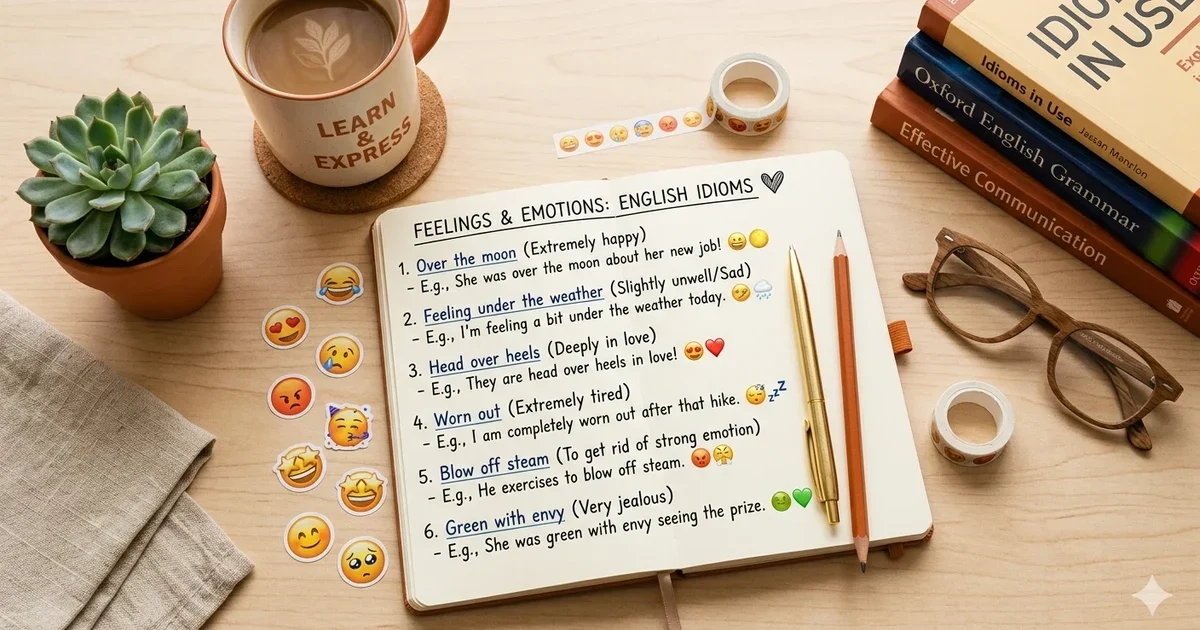
Quick Answer Box
Idioms about feelings are expressions that describe emotions in a creative and non literal way. They help people express happiness, sadness, anger, fear, and other emotions in a more natural and interesting form of English.
Introduction to Idioms About Feelings
Idioms about feelings are special expressions in English that show emotions in a creative way. People use them every day in conversations, movies, songs, and even in writing. These idioms do not mean exactly what the words say. Instead, they express feelings in a deeper and more natural way.
For example, when someone says “on cloud nine,” they do not mean a real cloud. They mean a feeling of extreme happiness. That is the beauty of idioms. They make language more colorful and expressive.
Learning idioms about feelings helps you understand real English better. Native speakers use them all the time without thinking. If you know them, you can follow conversations more easily and also sound more natural when you speak.
These idioms also help you express emotions that are hard to explain in simple words. Instead of saying “I am very happy,” you can say something like “I am over the moon.” It feels more alive and natural.
Meaning or Definition of Idioms About Feelings
Idioms about feelings are expressions that describe human emotions in a symbolic way. They do not follow literal meanings of words. Instead, they give a deeper emotional sense that people understand through context.
These idioms cover a wide range of emotions like happiness, sadness, anger, fear, love, jealousy, and excitement. Each idiom carries a hidden meaning that reflects how a person feels inside.
For example, “feeling blue” means feeling sad, not the color blue itself. Similarly, “green with envy” shows strong jealousy, not an actual green color. These expressions make emotional communication more interesting and expressive.
People use these idioms to sound more natural and connect better with others. They are very common in daily speech, storytelling, social media, and even professional conversations. Learning them improves both understanding and speaking skills in English.
Common Idioms About Feelings (Meaning, Examples, List, Emotional Expressions)
Idioms about feelings help express emotions in a simple but powerful way. They make communication more natural and relatable. Below are common idioms used in everyday English.
20 Common Idioms About Feelings
Over the moon
Meaning: Extremely happy and excited
Uses: People use this when something wonderful happens in life. It shows strong joy and satisfaction.
Example: She was over the moon after getting her dream job.
Down in the dumps
Meaning: Feeling very sad or low
Uses: It describes emotional sadness after disappointment or failure.
Example: He felt down in the dumps after losing the match.
On cloud nine
Meaning: Very happy and delighted
Uses: It is used when someone is full of happiness.
Example: They were on cloud nine after their wedding.
Heart in mouth
Meaning: Feeling very nervous or scared
Uses: It shows fear or tension in stressful moments.
Example: I had my heart in my mouth during the final exam result.
Feel blue
Meaning: Feeling sad or depressed
Uses: It describes emotional low moments in life.
Example: She feels blue when she misses her friends.
Jump for joy
Meaning: Extremely happy reaction
Uses: It shows excitement through physical expression.
Example: The kids jumped for joy on their trip announcement.
Green with envy
Meaning: Very jealous
Uses: It expresses strong jealousy toward someone.
Example: He was green with envy when his friend got a new bike.
Cry over spilled milk
Meaning: Being upset over something past
Uses: It reminds not to worry about things that cannot be changed.
Example: Don’t cry over spilled milk, focus on the next step.
Walk on air
Meaning: Feeling extremely happy
Uses: It describes light and joyful feelings.
Example: She was walking on air after the promotion.
Sick to stomach
Meaning: Feeling disgusted or worried
Uses: It shows emotional discomfort or stress.
Example: He felt sick to his stomach before the interview.
Blow off steam
Meaning: Release anger or stress
Uses: It describes calming down after emotional pressure.
Example: He went for a run to blow off steam.
Lose heart
Meaning: Feeling discouraged
Uses: It shows loss of hope in difficult situations.
Example: Don’t lose heart during tough times.
Bottled up feelings
Meaning: Hidden emotions
Uses: It describes not expressing emotions openly.
Example: She kept bottled up feelings for years.
In high spirits
Meaning: Feeling cheerful
Uses: It shows positive mood and energy.
Example: Everyone was in high spirits at the party.
Have a heavy heart
Meaning: Feeling sad or emotional
Uses: It expresses deep emotional pain.
Example: He left the city with a heavy heart.
Wear your heart on your sleeve
Meaning: Show emotions openly
Uses: It describes expressive emotional behavior.
Example: She wears her heart on her sleeve.
Burst into tears
Meaning: Start crying suddenly
Uses: It shows strong emotional reaction.
Example: She burst into tears after hearing the news.
Mixed emotions
Meaning: Feeling both happy and sad
Uses: It describes complex emotional situations.
Example: He had mixed emotions on his farewell day.
Feel on edge
Meaning: Feeling nervous or anxious
Uses: It shows tension before important events.
Example: I feel on edge before interviews.
Keep feelings under wraps
Meaning: Hide emotions
Uses: It describes controlling emotional expression.
Example: He kept his feelings under wraps at work.
Practical Usage of Idioms About Feelings in Daily Communication
Idioms about feelings make conversations more natural and expressive. People use them in real life to describe emotions quickly without long explanations. They help listeners understand the exact mood or situation in a simple way.
In daily English, these idioms appear in conversations, social media posts, movies, and even workplace chats. They make speech more colorful and less boring.
Examples in real life:
- I was on cloud nine when I passed my exam
- She feels blue after the breakup
- He is green with envy seeing my new phone
- They were over the moon at the wedding
- I had my heart in my mouth during the interview
- She burst into tears after hearing the good news
Comparison: Idioms About Feelings vs Emotional Phrases
| Idioms About Feelings | Emotional Phrases |
|---|---|
| Figurative meaning | Direct meaning |
| Creative expression | Simple explanation |
| Used in casual speech | Used in formal or simple talk |
| Example: over the moon | Example: very happy |
| More expressive | More straightforward |
How to Use Idioms About Feelings
Start by learning simple and common idioms first.
- Use idioms in daily conversations
- Learn meaning before using
- Practice in writing and speaking
- Watch English movies for context
- Avoid overusing idioms
Common Mistakes When Using Idioms About Feelings
Start by understanding how idioms actually work before using them.
- Using idioms in wrong context
- Translating word by word
- Overusing too many idioms
- Mixing similar idioms
- Ignoring real meaning
Conclusion
Idioms about feelings help people express emotions in a natural and creative way. They make English more interesting and closer to real-life speech. Instead of using simple words, idioms add depth and color to communication.
When you understand these idioms, you can easily connect with native speakers and understand their emotions better. It also helps you express yourself in a more confident and natural way. Learning them step by step makes English feel less mechanical and more human.
With regular practice, these idioms become part of your natural speaking style. They not only improve your vocabulary but also help you understand the emotional side of language more deeply.
FAQs About Idioms About Feelings
What are idioms about feelings?
They are expressions used to describe emotions in a creative way.
Why do people use idioms for feelings?
They make emotional communication more natural and expressive.
What does over the moon mean?
It means extremely happy and excited.
What is the meaning of feeling blue?
It means feeling sad or depressed.
Are idioms used in daily English?
Yes, they are very common in everyday speech.
Can idioms be used in writing?
Yes, especially in creative and informal writing.
What does green with envy mean?
It means feeling jealous of someone.
What does on cloud nine mean?
It means feeling extremely happy.
How can I learn idioms easily?
By reading, watching English content, and practicing daily.
Are idioms formal or informal?
Mostly informal but sometimes used in writing.