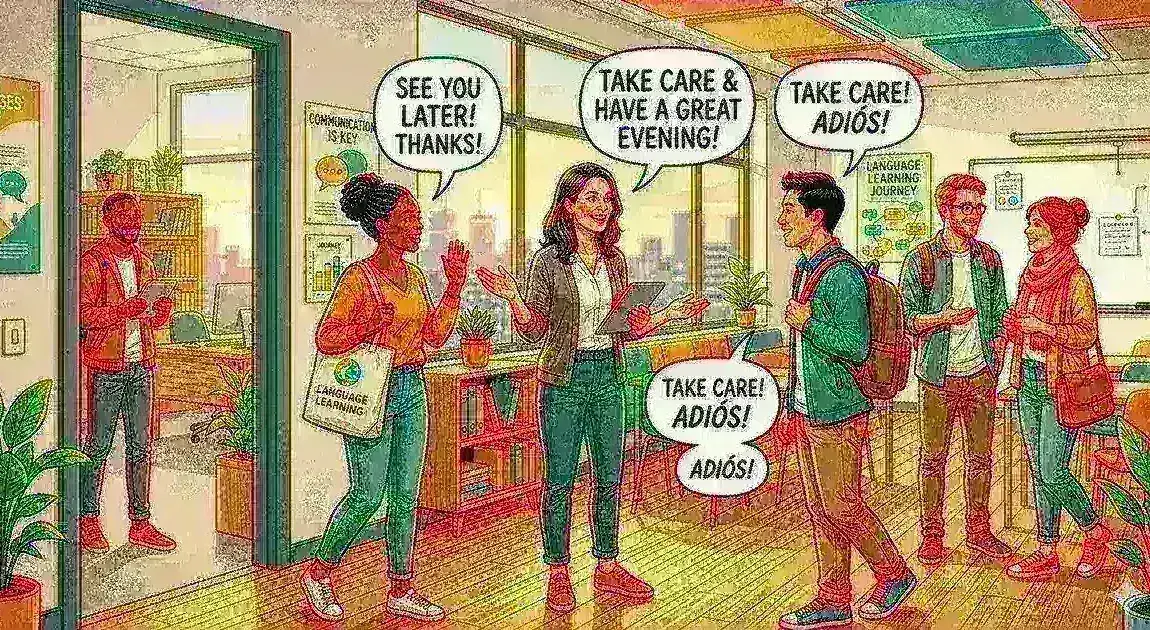
Saying goodbye is a normal part of daily life. People use it in many situations like school, work, travel, and casual meetings. Instead of always saying “goodbye,” native speakers often use idioms for goodbye to sound more natural and expressive. These idioms make conversations feel friendly, relaxed, and sometimes even emotional depending on the situation.
Idioms for goodbye also show tone and relationship between speakers. A simple “see you later” feels casual and friendly. On the other hand, “farewell” sounds more formal and final. This is why learning these expressions helps you understand English better and speak more like a native.
In daily conversations, you will notice that people rarely repeat the same goodbye. They switch between different phrases depending on mood, context, and timing. This makes idioms for goodbye an important part of spoken English.
Meaning and Definition of Idioms for Goodbye
Idioms for goodbye are special phrases used to say farewell in a more natural and expressive way than just saying “goodbye.” These expressions often carry emotion, tone, or context that simple words cannot show.
They help people communicate feelings like friendliness, urgency, formality, or casualness when leaving. For example, “take care” shows concern for the other person, while “I’m off” shows a quick and casual exit.
These idioms are widely used in English conversations, movies, and daily speech. They make communication smoother and more natural. Instead of sounding plain or repetitive, idioms for goodbye add personality to speech.
Understanding these expressions also helps in real-life situations like travel, meetings, or social gatherings where different tones of goodbye are needed.
Common Idioms for Goodbye (List of 20)
Break the ice
Meaning: To start a friendly conversation before leaving
Uses: Used when people want to make leaving feel smooth and friendly
Example: He tried to break the ice before saying goodbye to everyone
Call it a day
Meaning: To stop an activity and leave
Uses: Used when work or meeting ends for the day
Example: We decided to call it a day after finishing the project
Take care
Meaning: A caring way to say goodbye
Uses: Used with friends or family to show concern
Example: She said take care before leaving the office
See you later
Meaning: Casual goodbye with expectation of meeting again
Uses: Used in daily friendly conversations
Example: I will see you later after class
Farewell
Meaning: Formal and final goodbye
Uses: Used in official or emotional situations
Example: The team gave him a farewell party
Catch you later
Meaning: Informal way of saying goodbye
Uses: Used among friends in casual talks
Example: I am busy now, catch you later
Peace out
Meaning: Slang for a relaxed goodbye
Uses: Used in informal or playful settings
Example: He waved and said peace out
I’m off
Meaning: Leaving immediately
Uses: Used when someone is about to go
Example: I’m off to the station now
So long
Meaning: Old style goodbye
Uses: Used in casual or emotional farewells
Example: So long my friend, take care
Until next time
Meaning: Goodbye with expectation of meeting again
Uses: Used in friendly or regular meetings
Example: Until next time, stay safe
Gotta go
Meaning: Short informal exit
Uses: Used when someone is in a hurry
Example: I gotta go now, see you tomorrow
Bye for now
Meaning: Temporary goodbye
Uses: Used when you will meet again soon
Example: Bye for now, we will talk later
I’ll be seeing you
Meaning: Promise of meeting again
Uses: Used in friendly or emotional contexts
Example: I’ll be seeing you at the event
Take it easy
Meaning: Relaxed and friendly goodbye
Uses: Used to wish someone comfort and calmness
Example: Take it easy and enjoy your weekend
Adios
Meaning: Spanish influenced goodbye
Uses: Used in casual or fun conversations
Example: He said adios and left the room
Cheerio
Meaning: British informal goodbye
Uses: Used in light and friendly tone
Example: Cheerio mate, see you soon
Later alligator
Meaning: Fun rhyming goodbye
Uses: Used playfully among friends
Example: Later alligator, have a nice day
I’m out
Meaning: Informal exit phrase
Uses: Used when leaving quickly or casually
Example: I’m out, see you guys later
Time to head out
Meaning: Leaving a place
Uses: Used when preparing to go
Example: It’s time to head out now
Signing off
Meaning: Ending communication
Uses: Used in messages or calls
Example: I’m signing off for today
Practical Usage of Idioms for Goodbye
Idioms for goodbye are used in many real-life situations. They help make conversations sound natural instead of robotic or repeated. People choose different phrases depending on mood, time, and relationship with the listener.
In formal settings, simple phrases like “farewell” or “take care” work best. In casual chats, expressions like “catch you later” or “I’m off” feel more natural. This flexibility makes these idioms very useful in daily communication.
Here are some real-life examples:
- A teacher saying “take care” to students after class
- Friends saying “see you later” after school
- A worker saying “call it a day” after finishing tasks
- A traveler saying “farewell” before moving to another city
- A group chat ending with “bye for now”
Idioms for Goodbye Comparison Table
| Formal Goodbye | Informal Goodbye |
|---|---|
| Farewell | Catch you later |
| Take care | I’m off |
| Until next time | Peace out |
| I’ll be seeing you | Gotta go |
| So long | Later alligator |
How to Use Idioms for Goodbye
Use goodbye idioms naturally in real conversations
- Choose formal or informal based on situation
- Match idiom with your relationship to the person
- Practice common phrases in daily speech
- Avoid mixing too many idioms in one sentence
- Use simple expressions when unsure
Common Mistakes with Idioms for Goodbye
Many learners make small mistakes while using goodbye idioms
- Using informal idioms in formal meetings
- Misunderstanding the meaning of slang phrases
- Overusing the same expression repeatedly
- Saying idioms without correct context
- Trying to translate directly from native language
Conclusion
Idioms for goodbye make English conversations more natural and expressive. They help you sound friendly, polite, or formal depending on the situation. Instead of repeating “goodbye” again and again, these phrases give you more options to connect with people in a better way.
Learning these idioms also improves your speaking confidence. You start understanding tone, context, and emotion behind words. With regular practice, you can use them easily in daily life. Whether you are talking to friends, teachers, or colleagues, the right goodbye idiom always leaves a good impression.
FAQs About Idioms for Goodbye
What are idioms for goodbye?
They are special phrases used to say farewell in a more natural way.
Why do people use goodbye idioms?
They make conversations sound more natural and expressive.
Is “see you later” an idiom?
Yes, it is a common informal goodbye idiom.
What is a formal way to say goodbye?
Words like “farewell” or “take care” are formal.
Can I use goodbye idioms in writing?
Yes, especially in emails and casual messages.
What is the most common goodbye idiom?
“See you later” is one of the most common.
Are slang goodbye idioms okay to use?
Yes, but only in informal situations.
What does “call it a day” mean?
It means to stop work or activity and leave.
Is “peace out” formal or informal?
It is informal and playful.
How can I learn goodbye idioms fast?
Practice them in daily conversations and listen to native speakers.