Outdoor life connects people with nature in a simple and refreshing way. It includes hiking, camping, trekking, and exploring open spaces. English language often uses special phrases called idioms to describe these outdoor experiences in a creative way. These idioms do not always mean exactly what the words say, but they express feelings, actions, or situations related to outdoor life.
People use outdoor idioms in daily conversations, travel stories, and even social media captions. These expressions make language more colorful and natural. Instead of saying something in a direct way, idioms help you sound more fluent and expressive. For example, someone might say they want to go “back to nature” when they feel tired of city life.
Learning idioms for outdoors also helps in understanding native speakers better. It improves communication in real situations like traveling, camping trips, or nature tours. These idioms often reflect adventure, freedom, and peace. They also show how people connect emotions with nature. Once you understand them, you can use them easily in your speech and writing.
Meaning of Idioms for Outdoors
Idioms for outdoors are phrases that describe nature, outdoor activities, or experiences in open environments. These expressions carry deeper meanings that go beyond their literal words. They often describe feelings like freedom, adventure, relaxation, or challenge while being outside.
These idioms help people talk about outdoor life in a more natural and expressive way. Instead of saying “I went for a walk in nature,” someone might say “I hit the trail.” This makes communication more engaging and interesting.
Outdoor idioms also reflect human connection with nature. They are commonly used in travel writing, storytelling, and everyday speech. Many of them are linked with weather, landscapes, hiking, and exploration. Understanding them improves both vocabulary and fluency in English.
Common Idioms for Outdoors
Back to nature
Meaning: Returning to a simple life close to nature
Uses: People use this when they want to escape city stress and enjoy natural surroundings
Example: After a busy month, I went back to nature in the mountains
Take a hike
Meaning: Go away or leave a place
Uses: It is often used when someone wants space or time alone outdoors
Example: He told me to take a hike when I interrupted his fishing trip
Off the beaten path
Meaning: A place far from popular or crowded areas
Uses: Used when describing hidden travel spots or quiet natural places
Example: We found a small lake off the beaten path
Wild goose chase
Meaning: A useless or impossible search
Uses: Often used for outdoor searches that lead nowhere
Example: Looking for that lost key in the forest was a wild goose chase
In the great outdoors
Meaning: Being in open natural environments
Uses: Used when talking about camping, hiking, or nature trips
Example: We spent the weekend in the great outdoors
Go out on a limb
Meaning: Take a risky action or opinion
Uses: Used when someone tries something bold in outdoor decisions
Example: I went out on a limb and climbed the steep rock
Make a mountain out of a molehill
Meaning: Make a small problem seem big
Uses: Used during outdoor trips when someone overreacts
Example: Don’t make a mountain out of a molehill about a small scratch
Come rain or shine
Meaning: No matter the weather
Uses: Used for outdoor plans that continue in any condition
Example: We will go hiking come rain or shine
Under the weather
Meaning: Feeling sick or unwell
Uses: Used when someone feels tired during outdoor activities
Example: I felt under the weather after the long hike
Fresh as a daisy
Meaning: Feeling very energetic
Uses: Used after resting during outdoor adventures
Example: She woke up fresh as a daisy after camping
Hit the trail
Meaning: Start a journey or hike
Uses: Commonly used in hiking and trekking plans
Example: We hit the trail early in the morning
On cloud nine
Meaning: Extremely happy
Uses: Used after enjoying a great outdoor experience
Example: He was on cloud nine after the mountain climb
Down to earth
Meaning: Simple and practical person
Uses: Used to describe someone calm during outdoor situations
Example: Our guide was very down to earth
The calm before the storm
Meaning: A quiet moment before something intense
Uses: Used in weather or adventure situations
Example: It was the calm before the storm before the rain started
Weather the storm
Meaning: Survive a difficult situation
Uses: Used during tough outdoor conditions
Example: We had to weather the storm during heavy rain
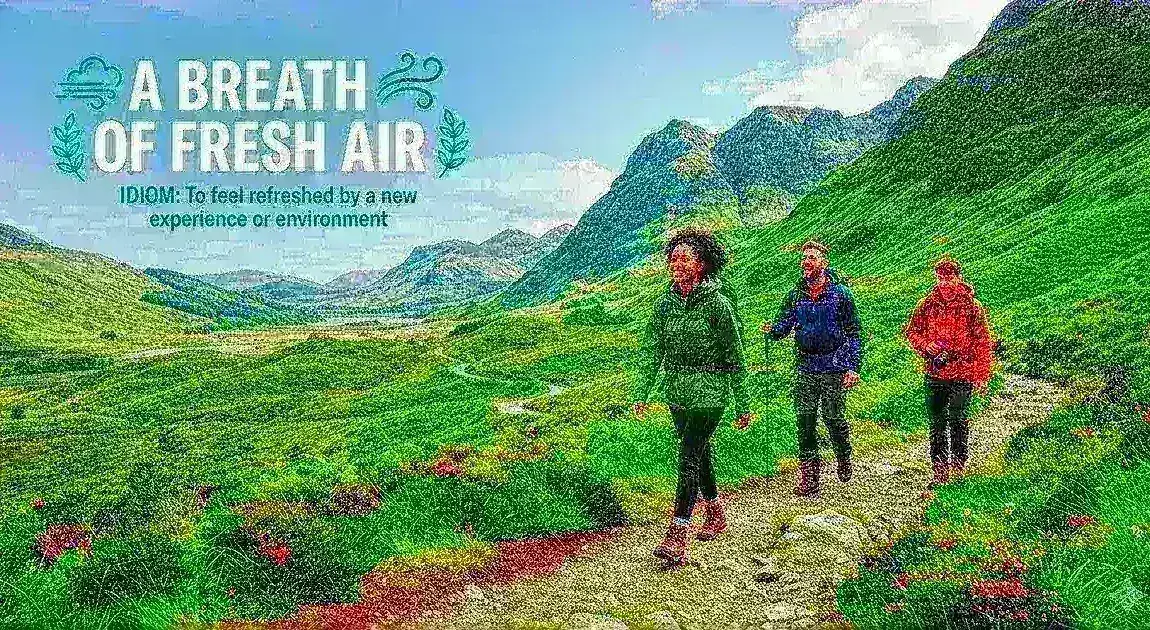
A breath of fresh air
Meaning: Something refreshing or new
Uses: Used when nature feels relaxing and peaceful
Example: The forest air was a breath of fresh air
Like a fish out of water
Meaning: Feeling uncomfortable in a situation
Uses: Used when someone struggles outdoors
Example: I felt like a fish out of water on the camping trip
Into the wild
Meaning: Going deep into natural areas
Uses: Used for adventurous outdoor exploration
Example: They went into the wild for a survival trip
Walk in the park
Meaning: Something very easy
Uses: Used when outdoor tasks feel simple
Example: The short hike was a walk in the park
Lost in the woods
Meaning: Confused or unable to find direction
Uses: Used during real or symbolic outdoor confusion
Example: We got lost in the woods while exploring
Practical Usage of Idioms for Outdoors
Outdoor idioms help people describe nature experiences in a more vivid way. They make conversations more natural and expressive. Travelers, hikers, and writers often use them to share emotions connected to outdoor life.
These idioms also help in storytelling. They bring life to travel blogs, captions, and conversations. Instead of plain sentences, idioms create stronger emotional impact.
Examples:
- We decided to hit the trail before sunrise
- The forest felt like a breath of fresh air after city noise
- During camping, we had to weather the storm all night
- She looked fresh as a daisy after sleeping under the stars
- The guide was down to earth and very helpful
- Our trip into the wild changed our perspective on nature
Idioms for Outdoors vs Nature Idioms vs Travel Idioms Comparison Table
| Aspect | Idioms for Outdoors | Nature Idioms | Travel Idioms |
|---|---|---|---|
| Focus | Outdoor activities and adventure | Natural elements and environment | Journeys and movement |
| Usage | Hiking, camping, exploration | Weather, land, scenery | Trips, tourism, transport |
| Tone | Active and adventurous | Descriptive and calm | Experiential and narrative |
How to Use Idioms for Outdoors
Use idioms in real conversations and writing naturally
- Use them in daily speaking practice
- Add them in travel stories or blogs
- Use them in captions for social media posts
- Practice them in outdoor activity descriptions
- Learn them through real life examples
Common Mistakes with Idioms for Outdoors
Many learners misuse idioms when they do not understand context
- Using idioms in the wrong situation
- Mixing two idioms together incorrectly
- Overusing idioms in one sentence
- Learning without understanding meaning
- Using them in formal writing when not needed
Conclusion
Outdoor idioms make English more lively and expressive. They help you describe nature experiences in a simple yet powerful way. Instead of plain words, you can share feelings and actions with more impact. This improves both speaking and writing skills.
When you use these idioms in real life, your communication becomes more natural. You also understand native speakers better during travel or outdoor conversations. With regular practice, these expressions become part of your everyday language. Outdoor idioms not only improve vocabulary but also make your storytelling more engaging and enjoyable.
FAQs on Idioms for Outdoors
What are idioms for outdoors?
They are phrases that describe outdoor life in a creative way.
Why do we use outdoor idioms?
They make speech more natural and expressive.
Are outdoor idioms common in English?
Yes, native speakers use them often in daily talk.
Can I use outdoor idioms in writing?
Yes, especially in blogs and storytelling.
What is an example of outdoor idiom?
Hit the trail is a common example.
Are outdoor idioms hard to learn?
No, they become easy with practice.
Where can I use these idioms?
In travel, hiking, and daily conversations.
Do idioms change meaning in context?
Yes, they often do.
How many outdoor idioms should I learn?
Start with 10 to 20 common ones.
Are outdoor idioms used in exams?
Yes, sometimes in English language tests.