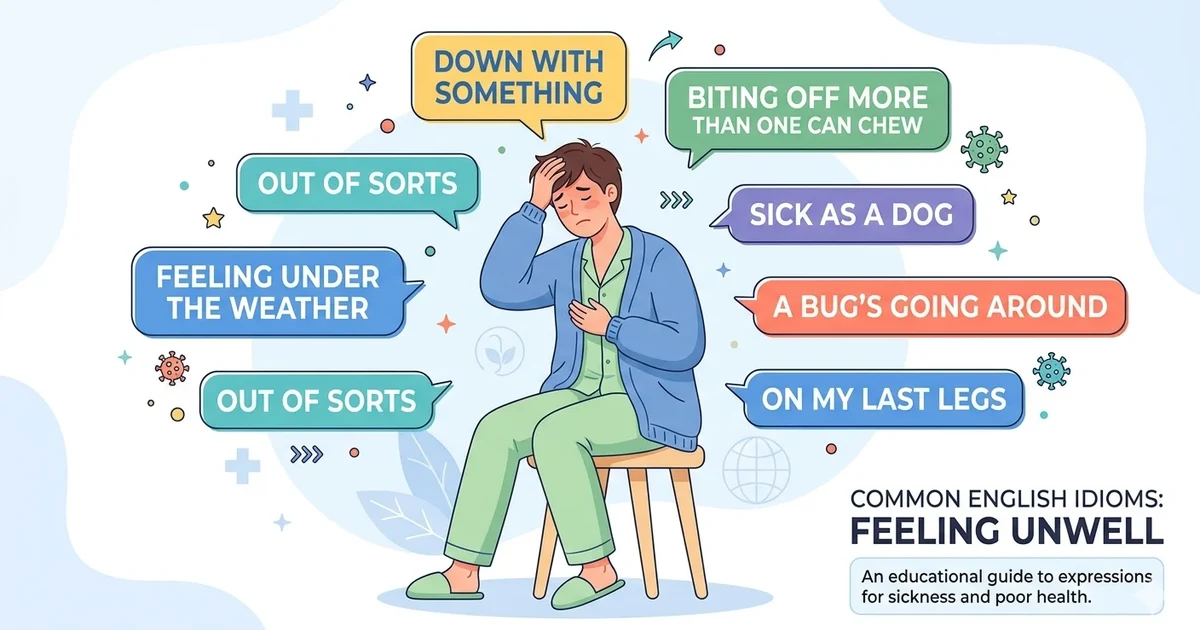
When people feel unwell, they often use special expressions instead of saying it directly. These expressions are called idioms for sick. They make language more natural and easy to understand in daily conversation. People use them in talking, writing, and even storytelling to describe health in a simple way.
Idioms for sickness are common in English speaking culture. You will hear them in movies, daily chats, and casual messages. They help you sound more fluent and expressive. Instead of saying someone is ill, you can use these idioms to show emotion and tone.
These expressions also help learners understand real English usage. Native speakers rarely use direct words for sickness in casual talk. They prefer softer and more creative phrases. That is why learning these idioms is useful for better communication.
Meaning or Definition of Idioms for Sick
Idioms for sick are expressions used to describe illness or poor health in a figurative way. They do not always mean exactly what the words say. Instead, they give a general idea about someone feeling unwell or weak.
These idioms help make speech more natural and less direct. For example, instead of saying someone is sick, people might say they are “under the weather.” It sounds softer and more conversational. Such phrases are widely used in everyday English.
They can describe mild illness, serious sickness, or general weakness. Some idioms also show emotional or physical tiredness. Learning them helps you understand how native speakers talk about health in real situations.
Common Idioms for Sick
Under the weather
Meaning: Feeling slightly sick or unwell
Uses: People use this when someone is not seriously ill but feels weak or tired
Example: I will stay home today because I am feeling under the weather
Sick as a dog
Meaning: Very sick or extremely ill
Uses: It is used when someone feels very bad physically, often with flu or infection
Example: He was sick as a dog after eating street food
Feeling off-color
Meaning: Not feeling well or slightly ill
Uses: Used when someone looks or feels unwell but not seriously sick
Example: She went home early because she was feeling off-color
Run down
Meaning: Very tired and lacking energy
Uses: Used when someone is weak due to stress or illness
Example: I have been working too much and feel completely run down
Not in the pink
Meaning: Not in good health
Uses: Used when someone is not feeling their best physically
Example: He looked not in the pink after the long trip
Green around the gills
Meaning: Looking pale or sick
Uses: Used when someone looks like they might vomit or feels nauseous
Example: She looked green around the gills during the boat ride
Out of sorts
Meaning: Feeling slightly unwell or moody
Uses: Used when someone feels physically or emotionally off
Example: I have been out of sorts since yesterday
At death’s door
Meaning: Extremely ill or very close to death
Uses: Used for very serious illness or dramatic situations
Example: He was so sick he looked at death’s door
On one’s last legs
Meaning: Very weak or close to collapse
Uses: Used when someone is extremely tired or ill
Example: After the long fever, I felt on my last legs
Catch a bug
Meaning: To get a minor illness
Uses: Used when someone catches a cold or flu
Example: I think I caught a bug from my friend
Come down with something
Meaning: To become ill
Uses: Used when someone starts feeling sick suddenly
Example: She came down with something after the rainy day
Take to one’s bed
Meaning: To stay in bed because of illness
Uses: Used when someone is too sick to move around
Example: He had to take to his bed for two days
Off one’s food
Meaning: Not feeling like eating due to illness
Uses: Used when sickness affects appetite
Example: I have been off my food since yesterday
Look like death warmed up
Meaning: Looking very sick or exhausted
Uses: Used when someone appears very unwell
Example: He looked like death warmed up after the exam stress
As pale as a ghost
Meaning: Very pale due to sickness or fear
Uses: Used when someone loses color in their face
Example: She was as pale as a ghost during the fever
Weak as a kitten
Meaning: Very weak and low in energy
Uses: Used when someone feels physically drained
Example: I felt weak as a kitten after the flu
Full of cold
Meaning: Having a cold or flu symptoms
Uses: Used when someone has blocked nose or cough
Example: He is full of cold and resting at home
Down with flu
Meaning: Suffering from flu
Uses: Used when someone has influenza symptoms
Example: She is down with flu this week
Burning up
Meaning: Having a high fever
Uses: Used when body temperature is very high
Example: He was burning up all night with fever
In poor health
Meaning: Not in good physical condition
Uses: Used for general long term illness or weakness
Example: My grandfather has been in poor health recently
Practical Usage of Idioms for Sick
People use idioms for sick in daily conversation to sound more natural. These expressions help describe health in a simple and emotional way. They also make speech less direct and more polite.
In real life, you will hear these idioms in families, schools, workplaces, and social chats. They help explain how someone feels without using medical terms. This makes communication easy and friendly.
Examples:
- I am feeling under the weather today so I will not attend school
- My friend was sick as a dog after the trip
- She looked green around the gills in the car
- He came down with something after the cold rain
- I have been run down because of work stress
- My brother is burning up with fever
Idioms for Sick vs Formal Expressions (Comparison Table)
| Idioms for Sick | Formal Expression |
|---|---|
| Under the weather | Mildly unwell |
| Sick as a dog | Severely ill |
| Run down | Fatigued due to illness |
| Come down with something | Become ill |
| On one’s last legs | Extremely weak or near collapse |
| Take to one’s bed | Confined to bed due to illness |
How to Use Idioms for Sick
Start simple and use them in daily speech
- Use them in casual conversations
- Match the idiom with the level of sickness
- Avoid using them in formal medical writing
- Practice them in real sentences
- Listen to native speakers for better understanding
Common Mistakes When Using Idioms for Sick
Use idioms naturally and avoid overdoing them
- Using idioms in formal reports
- Mixing up meanings of different idioms
- Using too many idioms in one sentence
- Applying serious idioms in mild situations
- Mispronouncing or misusing phrases
FAQs About Idioms for Sick
What are idioms for sick?
They are expressions used to describe illness in a creative way.
What does under the weather mean?
It means feeling slightly sick or unwell.
Is sick as a dog serious?
Yes, it describes very strong illness.
Can I use idioms in exams?
Yes, but only in informal or creative writing sections.
What is the most common idiom for sick?
Under the weather is one of the most common.
Are these idioms formal?
No, they are mostly informal expressions.
What does run down mean?
It means feeling very tired and low on energy.
When do people use catch a bug?
When someone gets a minor illness like flu or cold.
Is come down with something common?
Yes, it is widely used in daily English.
Can idioms describe serious illness?
Yes, some idioms describe very serious health conditions.
Conclusion
Idioms for sick are an important part of everyday English. They help you talk about health in a natural and expressive way. Instead of sounding direct, they make your speech softer and more human.
Learning these idioms improves your communication skills. You can understand movies, conversations, and native speakers more easily. They also help you express feelings in a simple and relatable way. When used correctly, these idioms make your English sound more fluent and confident.