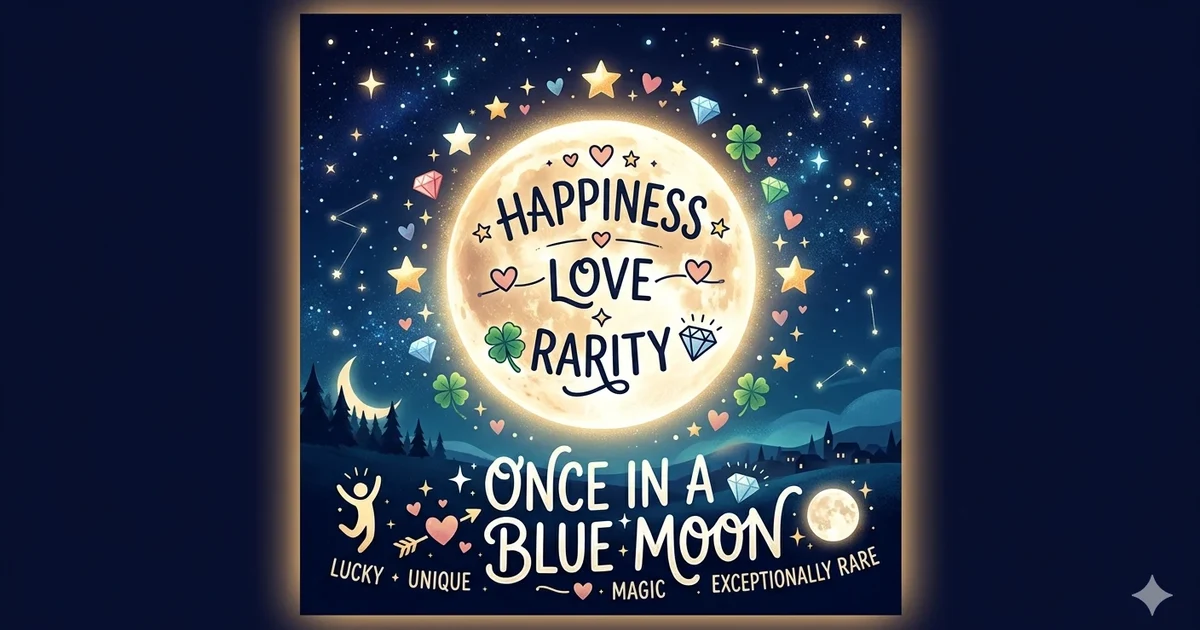
The moon has always captured human imagination. Its calm glow and distant beauty inspire feelings of wonder. Over time, people created idioms to describe emotions, actions, and dreams connected to the moon. These idioms often convey joy, longing, or rare opportunities.
Many of these expressions appear in daily conversation, writing, and even songs. Using moon idioms can make your language more colorful and expressive. For example, when someone is extremely happy, saying they are “over the moon” gives more life to the statement than simply saying they are happy.
Moon idioms also reflect culture and imagination. They are versatile and can be used in casual chat or creative writing. Understanding these expressions helps in both speaking and comprehension. It also makes reading literature more enjoyable, as you recognize the figurative meanings behind phrases.
Meaning or Definition of Moon Idioms
Moon idioms are figurative expressions that use the moon to convey feelings, events, or rarity. They are often symbolic and not meant to be taken literally. For instance, “once in a blue moon” signals something rare, not an actual blue moon.
These idioms help communicate emotions creatively. They can express happiness, desire, dreams, or nostalgia in ways ordinary words cannot. Each idiom has a specific nuance and context. Understanding the meaning is key to using them naturally.
Moon idioms often reflect the human tendency to connect celestial events with life experiences. They combine imagination with everyday language. Mastering them adds charm and depth to conversation and writing.
Common Idioms for the Moon
Over the Moon
Meaning: Extremely happy or delighted
Uses: Use this when someone feels great joy. It is common in casual conversations.
Example: She was over the moon after hearing about her promotion.
Once in a Blue Moon
Meaning: Something that happens very rarely
Uses: Use this to describe rare events. Works well in storytelling or casual chat.
Example: We only go out for fancy dinners once in a blue moon.
Moonstruck
Meaning: Infatuated or obsessed
Uses: Use when someone is acting irrationally due to love or fascination.
Example: He seemed moonstruck by her charm at the party.
Promise the Moon
Meaning: To make extravagant promises
Uses: Use when someone is over-promising or unrealistic.
Example: The candidate promised the moon during the campaign.
Ask for the Moon
Meaning: Request something impossible or unreasonable
Uses: Use to describe unrealistic demands.
Example: She asked for the moon when negotiating her salary.
Moonlight as
Meaning: To work a second job secretly
Uses: Use when describing side jobs done at night.
Example: He moonlights as a music teacher after his office hours.
Many Moons Ago
Meaning: A long time ago
Uses: Use to describe past events with nostalgia.
Example: We visited that town many moons ago.
Reach for the Moon
Meaning: Aim for ambitious goals
Uses: Use to inspire effort toward big dreams.
Example: She reached for the moon and started her own company.
Moon Over
Meaning: To long for someone or something
Uses: Use when expressing longing or daydreaming.
Example: He spent hours mooning over his first love.
Moonshine Dreams
Meaning: Unrealistic or fanciful ideas
Uses: Use when someone is imagining things that won’t happen.
Example: Her moonshine dreams of winning the lottery kept her hopeful.
Moon and Back
Meaning: To love someone very deeply
Uses: Use to express strong affection.
Example: I love you to the moon and back.
Moonwalker
Meaning: Someone who walks with style or confidence
Uses: Use for playful or literal descriptions of walking gracefully.
Example: He moonwalked across the stage during the performance.
Moon in Your Eyes
Meaning: Being dreamy or infatuated
Uses: Use to describe someone who looks lovestruck.
Example: She had a moon in her eyes when he spoke.
Harvest Moon
Meaning: A full moon during harvest time, often symbolic
Uses: Use in literary writing or nature descriptions.
Example: The fields glowed under the harvest moon.
Moonbeam
Meaning: A small ray of hope or light
Uses: Use to indicate hope or positivity.
Example: A moonbeam of encouragement kept him going.
Crying Moon
Meaning: Sad or melancholy mood
Uses: Use in poetic or expressive contexts.
Example: The crying moon reflected her loneliness.
Moonstruck Lover
Meaning: Someone irrationally in love
Uses: Use to describe overwhelming feelings for someone.
Example: The moonstruck lover wrote poems every night.
Moonlit Path
Meaning: A path illuminated by moonlight, symbolizing guidance
Uses: Use in writing or storytelling.
Example: They walked down the moonlit path in silence.
Moon Goddess
Meaning: Referring to a woman with beauty or mystery
Uses: Use in descriptive writing or admiration.
Example: She moved gracefully like a moon goddess.
Moonbeam Wishes
Meaning: Hopes or dreams, often delicate or fragile
Uses: Use in poetic or gentle contexts.
Example: He sent moonbeam wishes to his friend far away.
Practical Usage of Moon Idioms
Moon idioms bring life to daily speech. They allow you to express feelings more vividly. Using them can make stories, messages, or conversations more engaging. People often use these idioms in casual chats, social media posts, or writing.
For example, celebrating success can be more fun with “over the moon” instead of just saying happy. Similarly, describing rare events feels more expressive with “once in a blue moon.” These phrases add color to simple statements.
Examples:
- She was over the moon when her art was featured in a gallery.
- We go on vacation once in a blue moon.
- He mooned over the vacation photos for days.
- I promise to love you to the moon and back.
- He moonlights as a barista while studying at night.
Comparison Table of Hard Work vs Smart Work
| Aspect | Hard Work | Smart Work |
|---|---|---|
| Effort | High physical or mental effort | Efficient effort with strategy |
| Time | Long hours | Shorter, focused time |
| Outcome | May or may not succeed | Higher chance of success |
| Approach | Repetitive tasks | Innovative methods |
| Focus | Quantity over quality | Quality over quantity |
How to Use Moon Idioms
Short intro: Use these tips for natural application
- Use idioms in casual conversation
- Incorporate them into storytelling
- Match idioms to emotion or context
- Avoid overusing the same idiom
- Explain if the audience might not know it
Common Mistakes
Short intro: Watch out for these common errors
- Using idioms literally
- Overstuffing sentences with idioms
- Applying in formal writing inappropriately
- Mixing idioms with unrelated topics
- Forgetting the nuance or tone of the idiom
FAQs About Moon Idioms
1. What does “over the moon” mean?
It means extremely happy or delighted.
2. How do you use “once in a blue moon”?
Use it to describe something that happens rarely.
3. Can “moonlight as” be used professionally?
Yes, when describing a second job or side work.
4. What is the origin of “once in a blue moon”?
It comes from the rare occurrence of a second full moon in a month.
5. Are moon idioms used in modern English?
Yes, many are common in casual and literary use.
6. Which idiom expresses deep love?
“To the moon and back” shows strong affection.
7. Can children understand moon idioms?
Some simple ones like “over the moon” are easy for kids.
8. What does “moonstruck” mean?
It means being obsessed or infatuated.
9. How do I know when to use “promise the moon”?
Use it for extravagant or unrealistic promises.
10. Are moon idioms mostly poetic?
Many are, but some are common in everyday speech.
Conclusion
Moon idioms add charm and expressiveness to language. They allow people to convey feelings, dreams, or rare events in a memorable way. Using them correctly makes conversations and writing more vivid and engaging.
Learning these idioms also helps with comprehension of literature and casual speech. With a little practice, you can use moon idioms naturally. They are versatile tools that make language more colorful and fun.