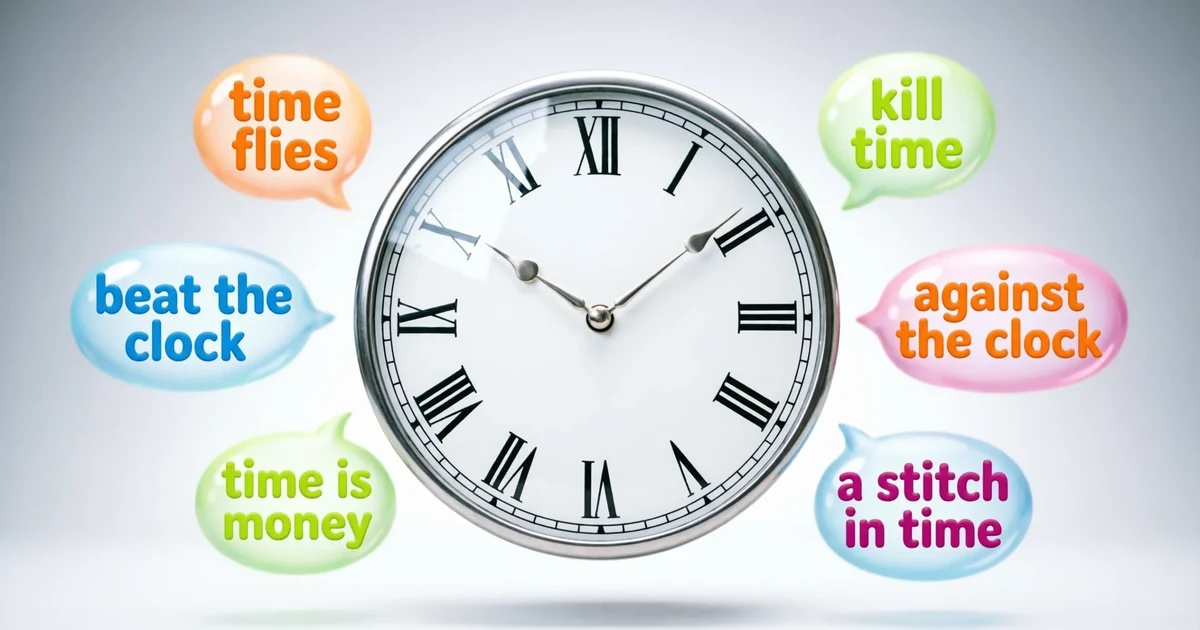
Time plays a huge role in everyday conversations. People often talk about being late, finishing something quickly, or waiting for the right moment. In English, many of these ideas appear through idioms.
Idioms for time make conversations more natural and expressive. Instead of explaining something with long sentences, a short idiom can describe the situation clearly.
Native speakers use time idioms in daily life. You hear them at work, in school, and in casual chats with friends. Phrases like “call it a day” or “race against time” quickly show how someone feels about a situation. These expressions also help speakers sound more fluent and confident.
Learning idioms for time can improve both speaking and writing skills. They add personality to language and help learners understand real conversations better. Once you know how these idioms work, it becomes easier to follow movies, podcasts, and everyday discussions in English.
Meaning and Definition of Idioms for Time
Idioms for time are expressions that describe situations related to time using figurative language. The words in the phrase often do not match the literal meaning. Instead, the idiom represents an idea that people understand through common usage.
For example, when someone says “time flies,” they do not mean time literally moves through the air. The phrase simply means that time feels like it passes very quickly. These types of expressions appear frequently in spoken English and informal writing.
Time idioms help people talk about deadlines, waiting, speed, and timing in a simple way. They make communication smoother and more colorful. Once learners understand the meaning behind these phrases, they can use them naturally in conversations and daily situations.
Common Idioms for Time in English
Against the Clock
Meaning: Working very fast because time is limited.
Uses: People use this idiom when they must finish something before a deadline. It often appears in work or exam situations.
Example: We worked against the clock to finish the project before the meeting.
Beat the Clock
Meaning: Finish something before the deadline.
Uses: This idiom appears when someone manages to complete a task just in time. It often shows relief or success.
Example: She beat the clock and submitted her assignment seconds before midnight.
Call It a Day
Meaning: Stop working for the rest of the day.
Uses: People say this when they feel tired or when the task for the day is finished.
Example: We finished the report, so let’s call it a day.
In the Nick of Time
Meaning: At the last possible moment.
Uses: This idiom appears when something happens just before it becomes too late.
Example: He arrived in the nick of time to catch the train.
Around the Clock
Meaning: Continuously for twenty four hours.
Uses: People use it when something happens without stopping. It often relates to work or services.
Example: The hospital staff works around the clock.
Time Flies
Meaning: Time passes very quickly.
Uses: People say this when they feel surprised at how fast time has passed.
Example: Time flies when you spend the day with good friends.
Behind the Times
Meaning: Old fashioned or not modern.
Uses: This idiom describes someone who does not follow modern trends or ideas.
Example: My uncle still uses a flip phone and seems behind the times.
Ahead of Time
Meaning: Earlier than expected.
Uses: People use this phrase when something happens before the planned time.
Example: We arrived at the airport ahead of time.
Third Time’s the Charm
Meaning: The third attempt will succeed.
Uses: This idiom appears when someone fails twice but believes the next try will work.
Example: I failed the test twice but passed on the third try. Third time’s the charm.
Better Late Than Never
Meaning: It is good to do something even if it happens late.
Uses: People say this when someone finally completes a task or arrives late.
Example: He finally apologized after weeks. Better late than never.
Time Is Money
Meaning: Time is valuable and should not be wasted.
Uses: This phrase often appears in business or work situations.
Example: The manager reminded the team that time is money.
A Matter of Time
Meaning: Something will happen sooner or later.
Uses: People use it when they believe an event is certain in the future.
Example: With his talent, success is only a matter of time.
At the Eleventh Hour
Meaning: At the very last moment.
Uses: This idiom describes something done right before the deadline.
Example: They changed the plan at the eleventh hour.
Kill Time
Meaning: Spend time doing something while waiting.
Uses: People use this phrase when they try to stay busy while waiting for something.
Example: We walked around the mall to kill time before the movie.
Make Up for Lost Time
Meaning: Work faster to recover wasted time.
Uses: This idiom appears when someone tries to progress quickly after a delay.
Example: After the delay, the team worked hard to make up for lost time.
On Borrowed Time
Meaning: Living longer than expected or beyond a limit.
Uses: People often use it in serious situations involving risk or health.
Example: After the accident, he felt like he was living on borrowed time.
Take Your Time
Meaning: Do something slowly without rushing.
Uses: This phrase appears when someone gives permission to relax and not hurry.
Example: Take your time and finish the work carefully.
Out of Time
Meaning: No time left to continue.
Uses: This idiom appears when a deadline has arrived.
Example: The speaker stopped because he ran out of time.
Time on Your Hands
Meaning: Having a lot of free time.
Uses: People say this when someone has nothing important to do.
Example: During the holidays, I had plenty of time on my hands.
Race Against Time
Meaning: Trying to finish something very quickly before time runs out.
Uses: This idiom often appears in urgent situations or emergencies.
Example: Doctors worked in a race against time to save the patient.
Practical Usage of Idioms for Time in Daily Conversation
Time idioms appear often in everyday speech. People use them to talk about deadlines, waiting, speed, and planning. These phrases help conversations sound more natural and relaxed.
Learners usually notice these idioms in movies, workplace discussions, and casual chats. When you understand their meaning, you can easily recognize the situation someone describes.
Real life examples:
She finished the presentation in the nick of time.
We worked against the clock to meet the project deadline.
Let’s call it a day and continue tomorrow.
I arrived ahead of time for the interview.
We walked around the park to kill time before dinner.
Idioms for Time Comparison Table
| Expression Type | Meaning | Example Situation |
|---|---|---|
| Time Flies | Time passes quickly | Enjoying a vacation |
| Against the Clock | Working fast before deadline | Finishing work before submission |
| Around the Clock | Nonstop activity | Hospital staff working all day |
| Kill Time | Passing time while waiting | Waiting before a movie |
| At the Eleventh Hour | Last moment action | Submitting work just before deadline |
How to Use Idioms for Time Correctly
A few simple tips can help you use time idioms naturally.
- Learn the meaning before using an idiom
- Listen to how native speakers use them
- Use idioms mostly in casual conversation
- Practice them in sentences while speaking
- Avoid using too many idioms in one sentence
Common Mistakes When Using Idioms for Time
Many learners make small mistakes while learning idioms.
- Using an idiom in the wrong situation
- Mixing two idioms in the same sentence
- Trying to translate idioms word by word
- Using idioms in very formal writing
- Forgetting the real meaning of the phrase
FAQs About Idioms for Time
What are idioms for time in English
Idioms for time are phrases that describe time related situations using figurative language.
Why are time idioms important in English
They make conversations more natural and help speakers express ideas quickly.
What is the easiest idiom for time to learn
“Time flies” is one of the easiest and most common time idioms.
Can idioms for time be used in daily conversation
Yes. Native speakers use them regularly in casual conversations.
Are time idioms suitable for formal writing
Most idioms work better in informal or conversational English.
How can beginners learn idioms for time easily
Reading examples and practicing sentences helps learners remember them.
What does “against the clock” mean
It means working quickly because time is limited.
What does “call it a day” mean
It means stopping work for the rest of the day.
How many idioms for time exist in English
There are many, but learners usually start with the most common ones.
Do idioms help improve English fluency
Yes. They help learners sound more natural when speaking English.
Conclusion on Idioms for Time
Idioms for time play an important role in everyday English. They allow speakers to express ideas about deadlines, waiting, speed, and timing in a simple and engaging way. Instead of long explanations, a short phrase can describe an entire situation.
Learning these expressions also helps people understand native speakers more easily. Movies, conversations, and workplace discussions often include idioms like “in the nick of time” or “race against time.” Once learners become familiar with these phrases, their English starts to sound more natural and confident.