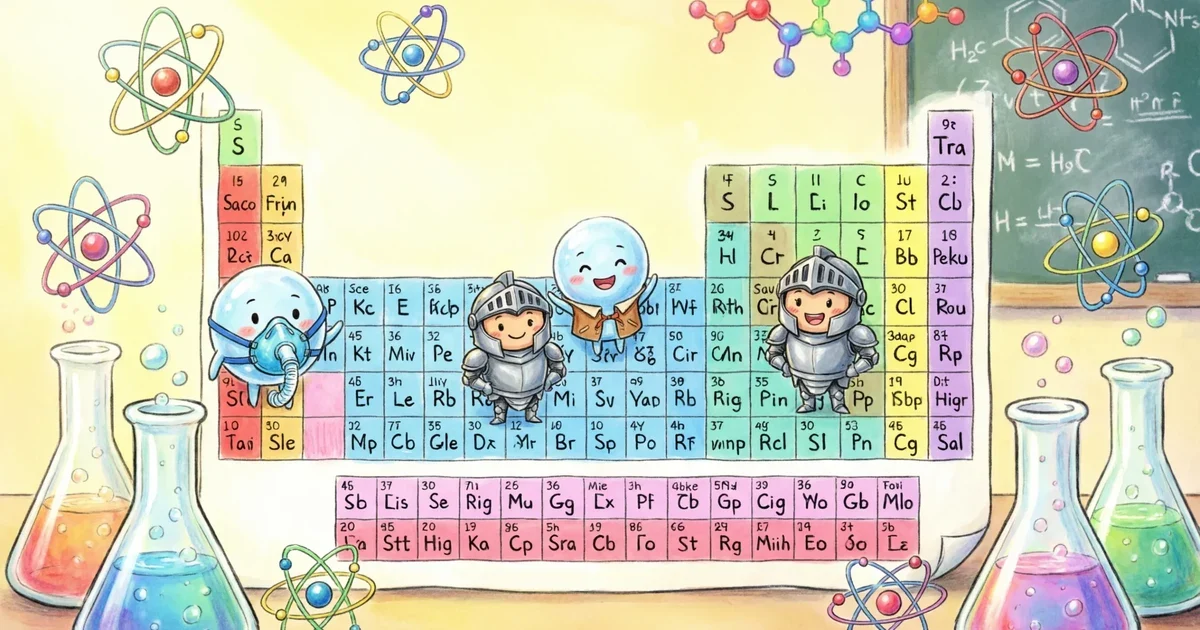
Chemistry may sound serious, but the periodic table hides a lot of humor. Each element has a symbol, a personality, and plenty of chances for clever wordplay.
That is why periodic table puns are so popular online. People share them in science memes, classrooms, and even social media captions. They mix simple chemistry ideas with playful jokes that anyone can enjoy.
If you love nerdy humor or just want a few smart jokes to share, these periodic table puns will definitely get a reaction.
Elemental Laughs From the Periodic Table ⚗️
• I told a joke about sodium, but Na… nobody reacted.
Explanation: “Na” is the chemical symbol for sodium, and it sounds like the word “nah,” meaning no reaction.
• Helium walked into the room and lifted everyone’s mood instantly.
Explanation: Helium is lighter than air and used in balloons, so it “lifts” things.
• Oxygen tried stand-up comedy but kept losing its breath.
Explanation: Oxygen is required for breathing, so the joke links oxygen with breath.
• Gold joined the comedy club because it wanted to shine.
Explanation: Gold is famous for its bright shine and value.
• Neon opened a comedy bar and promised bright jokes.
Explanation: Neon lights glow brightly, so the joke connects light with humor.
• Iron told jokes so strong nobody could break them.
Explanation: Iron is known for strength and durability.
• Carbon makes the best jokes because it bonds with everyone.
Explanation: Carbon forms many chemical bonds with other elements.
• Argon never laughs at jokes because it is noble.
Explanation: Argon is a noble gas and is known for not reacting with others.
• Potassium tried comedy but K it simple.
Explanation: Potassium’s symbol is “K,” which sounds like “keep.”
• Zinc joined the stage because it wanted to stand out.
Explanation: Zinc is often used to coat metals, making them noticeable.
• Nitrogen filled the room with quiet laughter.
Explanation: Nitrogen makes up most of the air but is invisible.
• Hydrogen told the first joke because it is number one.
Explanation: Hydrogen is the first element in the periodic table.
Nerdy Chemistry Puns That Spark Reactions 🧪
• Beryllium and gold started a band called BeAu.
Explanation: Combining the symbols Be and Au forms a wordplay band name.
• Lithium loves jokes because they energize it.
Explanation: Lithium is used in batteries, which store energy.
• Fluorine always delivers sharp humor.
Explanation: Fluorine is a highly reactive element.
• Calcium loves strong punchlines.
Explanation: Calcium helps build strong bones.
• Silicon creates digital jokes that compute perfectly.
Explanation: Silicon is essential in computer chips.
• Phosphorus lights up every comedy stage.
Explanation: Phosphorus glows in certain conditions.
• Aluminum keeps jokes light but strong.
Explanation: Aluminum is lightweight but durable.
• Sulfur jokes smell funny sometimes.
Explanation: Sulfur is known for its strong smell.
• Chlorine cleans up weak jokes quickly.
Explanation: Chlorine is commonly used for cleaning and disinfecting.
• Titanium makes jokes that are tough to beat.
Explanation: Titanium is known for strength.
• Nickel always adds five cents of humor.
Explanation: A nickel coin is worth five cents.
• Copper connects every punchline smoothly.
Explanation: Copper is widely used in electrical wiring.
Science Class Periodic Table Puns 🎓
• The chemistry teacher said jokes must have good reactions.
Explanation: Chemical reactions are a key part of chemistry.
• Students said the periodic table has great chemistry with humor.
Explanation: The table organizes elements used in chemistry.
• The class loved jokes that bonded well.
Explanation: Chemical bonds connect atoms together.
• One joke exploded like a lab reaction.
Explanation: Some chemical reactions are explosive.
• The lab group shared jokes during every experiment.
Explanation: Labs often involve teamwork and experiments.
• The professor said humor is an element of learning.
Explanation: The joke uses “element” as both chemistry and learning humor.
• Chemistry homework needed more reaction time.
Explanation: Reactions also mean responses to jokes.
• The classroom laughed in perfect chemical balance.
Explanation: Balance refers to balanced chemical equations.
• The lab assistant kept the jokes stable.
Explanation: Stability is a concept in chemistry.
• Every joke had the right formula.
Explanation: Chemistry formulas represent elements and compounds.
• Students bonded over science humor.
Explanation: Bonding is both social and chemical.
• The best jokes had positive energy.
Explanation: Energy is a key concept in chemistry.
Element Symbols Turned Into Puns 🔬
• I told my friend Be positive.
Explanation: “Be” is the symbol for beryllium and sounds like “be.”
• Na worries, chemistry jokes are fun.
Explanation: “Na” is sodium’s symbol and sounds like “nah.”
• K, let’s continue the experiment.
Explanation: “K” is potassium’s symbol.
• Feels like iron humor today.
Explanation: “Fe” is the symbol for iron.
• Cu later, said the copper atom.
Explanation: “Cu” is copper’s symbol and sounds like “see you.”
• Sn jokes are always tin-credible.
Explanation: “Sn” is the symbol for tin.
• Pb ready for more jokes.
Explanation: “Pb” is the symbol for lead.
• He said helium jokes float.
Explanation: “He” is helium’s symbol.
• I Am ready for chemistry laughs.
Explanation: “Am” is the symbol for americium.
• No bad jokes allowed today.
Explanation: “No” is the symbol for nobelium.
• B calm and enjoy science humor.
Explanation: “B” is the symbol for boron.
• O yes, more chemistry jokes please.
Explanation: “O” is the symbol for oxygen.
Atomic Humor That Explodes With Fun ⚛️
• Atoms make great friends because they stick together.
Explanation: Atoms form bonds that hold them together.
• The atom said life is all about balance.
Explanation: Atoms balance electrons and protons.
• One atom stole an electron and became negative.
Explanation: Losing or gaining electrons creates ions.
• The molecule party had strong connections.
Explanation: Molecules are formed through chemical bonds.
• The lab exploded with laughter.
Explanation: Some reactions release energy dramatically.
• The atom refused to split the joke.
Explanation: Splitting atoms relates to nuclear reactions.
• Molecules danced in perfect rhythm.
Explanation: Molecular movement can be described scientifically.
• The scientist loved charged humor.
Explanation: Charges refer to electrons and ions.
• The lab experiment had explosive comedy.
Explanation: Some chemical reactions release energy.
• The atom stayed neutral during debates.
Explanation: Neutral atoms have equal protons and electrons.
• Chemistry jokes create chain reactions.
Explanation: Chain reactions spread quickly, like laughter.
• The molecule held the group together.
Explanation: Molecules connect atoms into structures.
Chemistry Lab Laughs and Reactions 🧫
• The beaker heard a joke and bubbled with laughter.
Explanation: Liquids in beakers often bubble during reactions.
• The test tube could not contain the humor.
Explanation: Test tubes contain chemicals during experiments.
• The lab coat loved protective humor.
Explanation: Lab coats protect scientists.
• The microscope zoomed in on the punchline.
Explanation: Microscopes magnify tiny objects.
• The burner heated up the comedy stage.
Explanation: Bunsen burners provide heat in labs.
• The flask kept the jokes mixed well.
Explanation: Flasks mix chemical solutions.
• The pipette delivered tiny jokes perfectly.
Explanation: Pipettes measure small liquid amounts.
• The lab timer said the joke reaction was instant.
Explanation: Reactions can happen quickly.
• The safety goggles saw everything clearly.
Explanation: Goggles protect eyes during experiments.
• The scientist measured humor carefully.
Explanation: Measurements are essential in chemistry.
• The experiment sparked new laughter.
Explanation: Sparks can occur in reactions.
• The lab notebook recorded every joke reaction.
Explanation: Scientists document experiments in notebooks.
Smart Science Wordplay Puns 🧠
• Science jokes always have great chemistry.
Explanation: “Chemistry” refers to both science and good connection.
• Nerd humor bonds people together.
Explanation: Bonding is both social and chemical.
• Brainy jokes always react well.
Explanation: Reaction refers to laughter and chemical reactions.
• Smart humor forms strong elements.
Explanation: Elements are the building blocks of matter.
• The nerd joke table had perfect structure.
Explanation: The periodic table organizes elements.
• The smartest joke had great balance.
Explanation: Balance is important in equations.
• Science humor always compounds the fun.
Explanation: Compounds form when elements combine.
• Clever jokes have atomic energy.
Explanation: Atomic energy relates to atoms.
• Nerd jokes connect like molecules.
Explanation: Molecules connect atoms.
• Knowledge sparks powerful reactions.
Explanation: Learning can spark interest like reactions.
• Science humor keeps curiosity alive.
Explanation: Curiosity drives scientific discovery.
• Every pun has the right formula.
Explanation: Formulas represent chemical compounds.
Periodic Table Nerd Humor Finale 🤓
• The periodic table threw a party for all elements.
Explanation: The table contains all known elements.
• Hydrogen arrived first as usual.
Explanation: Hydrogen is the first element.
• Gold dressed fancy for the event.
Explanation: Gold is precious and valuable.
• Neon lit up the dance floor.
Explanation: Neon glows brightly.
• Iron kept everything strong and stable.
Explanation: Iron is strong and durable.
• Helium lifted the mood again.
Explanation: Helium balloons float.
• Carbon connected all the guests.
Explanation: Carbon bonds easily.
• Argon stayed quiet in the corner.
Explanation: Noble gases rarely react.
• Oxygen kept everyone breathing easily.
Explanation: Oxygen supports breathing.
• Silicon built the DJ computer.
Explanation: Silicon powers computer chips.
• Aluminum kept the party light.
Explanation: Aluminum is lightweight.
• Titanium guarded the door strongly.
Explanation: Titanium is extremely strong.
conclusion
Chemistry humor proves that science can be both smart and hilarious. Periodic table puns mix knowledge with playful wordplay, making learning feel fun instead of serious. Whether you share them in class, online, or with friends who love nerdy jokes, these puns are sure to create a reaction.